
R.E.M.’s sound gradually evolved over its 31 years of existence, but there were two points where it changed drastically. The first of those occurred when Scott Litt co-produced his first album for them, and the second occurred when he stopped co-producing their albums. While R.E.M.’s jangle-infused first four albums are still revered among their fans, the sharper-edged Document shook up the band’s sound and image. It also gave them their first Platinum album and began their ascent into superstardom in earnest.
Litt went on to co-produce R.E.M.’s next five albums with the band, helping to shape the sound of one of the most popular rock groups in the world from the late ‘80s through the mid-’90s. Once drummer Bill Berry left R.E.M. in 1997, the remaining members opted for a new producer (Pat McCarthy) and a markedly different sound. In 1998, Up ushered in a sonically bold but less commercially successful period.
Videos by American Songwriter
There are worse things than to have your production work be synonymous with R.E.M., but Litt’s legacy extends well beyond those half-dozen albums. In addition to the albums he engineered for acts like Ian Hunter and Carly Simon and the later mixing work he did for Nirvana and Hole, Litt produced albums for several artists not called R.E.M. These four provide an impressive sample of Litt’s other work.
Indigo Girls, Indigo Girls
Indigo Girls were tied to R.E.M. in several ways besides sharing a producer. Michael Stipe provided vocals on “Kid Fears,” the remainder of the band performed on “Tried to Be True,” and the duo opened for R.E.M. on their Green Tour. Even though Litt produced Indigo Girls’ second album, their sound on this record bears only a slight resemblance to the albums he produced for R.E.M. Indigo Girls is even folkier than R.E.M.’s early albums.
The album is best known for its leadoff track and lead single, “Closer to Fine,” which is still Indigo Girls’ biggest hit. That was even the case before the song gained new fans due to its inclusion in the 2023 Barbie movie. Litt also produced Indigo Girls’ 1990 follow-up, Nomads Indians Saints.
The Replacements, All Shook Down
The Replacements also have some R.E.M. connections. Most notably, they considered Peter Buck as a producer for their 1984 album Let It Be, and the R.E.M. guitarist performed the solo for “I Will Dare.” All Shook Down, the Replacements’ 1990 finale, was initially slated to be a solo project for frontman Paul Westerberg, and it features several guest musicians, including Steve Berlin (Los Lobos), John Cale (Velvet Underground), Johnette Napolitano (Concrete Blonde), and Benmont Tench (Tom Petty and the Heartbreakers). Westerberg wrote straight-ahead rock songs for the album, much like he did for Don’t Tell a Soul. Litt also mixed All Shook Down, and the band were far happier with the final results than they were with the Chris Lord-Alge-mixed Don’t Tell a Soul.
The Juliana Hatfield Three, Become What You Are
R.E.M. were clearly an influence on Juliana Hatfield and her prior band Blake Babies, but Litt didn’t R.E.M.-ify her sound on this 1993 album. In an interview for SPIN, Litt said, “There’s not much more to do to the sound. She’s playing guitar and leading the band. We added stuff, but it’s Juliana.” Litt actually played Become What You Are for R.E.M. when they were in the planning stages for Monster, and he said they were “really excited about it.” The album also features keyboards from frequent R.E.M. contributor Peter Holsapple. His band, the dB’s, made the first album Litt ever produced, Repercussion (1981).
Become What You Are includes “My Sister,” which was a No. 1 hit on Billboard’s Alternative Airplay chart. The album was The Juliana Hatfield Three’s first to crack the Billboard charts, topping the Heatseekers chart and reaching No. 119 on the Billboard 200.
Liz Phair, Whitechocolatespaceegg
Liz Phair co-produced her first two albums with Brad Wood, but for her third release, Litt and Jason Chasko joined the mix. All three of Phair’s co-producers played on Whitechocolatespaceegg, with Litt credited with acoustic guitar, bass, harmonica, violin, drums, keyboards, and background vocals. Stipe was the only member of R.E.M. not to perform on the album, and longtime auxiliary member Scott McCaughey played guitar. Phair’s 1998 album generally has a more polished sound than either of its predecessors—Exile in Guyville (1993) and Whip-Smart (1994)—and it also has more sonic variety.
Despite the indie star power that graced Whitechocolatespaceegg’s liner notes, the album is the only one out of Phair’s first four releases to not receive Gold certification. Its lone single, “Polyester Bride,” also failed to reach any Billboard chart.
When you purchase through links on our site, we may earn an affiliate commission.
Photo by Mike Coppola/Getty Images
More The List
-
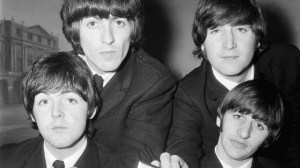
The Beatles pose with their MBEs at a press conference held at the Saville Theatre, London, following their investiture at Buckingham Palace. Top left to right: George Harrison, John Lennon. Bottom: Paul McCartney and Ringo Starr. 26th October 1965. (Photo by Mirrorpix via Getty Images) -
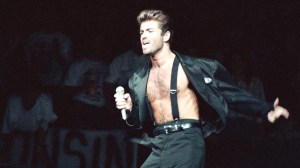
George Michael performing in 1989. (Photo by Jim Steinfeldt/Michael Ochs Archives/Getty Images) -
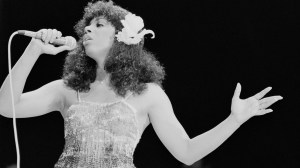
American singer-songwriter Donna Summer (1948 – 2012) performing on stage, USA, July 1979. (Photo by Michael Putland/Getty Images) -
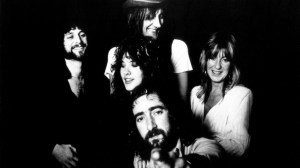
Photo by Michael Ochs Archives/Getty Images -
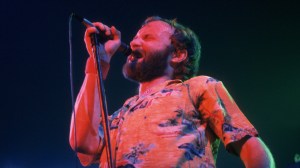
ROSEMONT, IL – JUNE 7: Phil Collins of Genesis performs at the Rosemont Horizon on June 7, 1980 in Rosemont, Illinois (Photo by Paul Natkin/WireImage) -
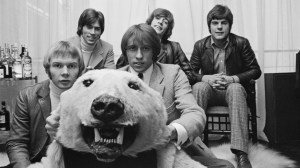
Pop group the Bee Gees posed with a stuffed polar bear in an office in London circa April 1968. Members of the band are, from left, Colin Petersen, Barry Gibb, Maurice Gibb (1949-2003), Robin Gibb (1949-2012) and Vince Melouney. (Photo by Ivan Keeman/Redferns) -
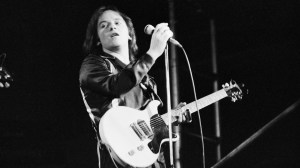
Singer, songwriter and musician Eric Stewart performing with English rock band 10cc, February 1976. (Photo by Michael Putland/Getty Images) -

Patrick Swayze and Jennifer Grey in a scene from the film 'Dirty Dancing', 1987. (Photo by Vestron/Getty Images)