
As these 1960s, ‘70s, and ‘80s rock bands prove, the right cover song can sometimes be the difference between a career flop and a hit record. In some cases, the band just transitioned into a new project or lineup and needed a signature song to pull them out of their creative slump. Other times, the band simply lacked a song worthy of being a lead single on an upcoming album, so they added a new track to the listing.
Whatever the reason, cutting a cover version of a song that’s already popular can widen a band or artist’s audience, put them back on the charts, and give their careers a much-needed boost. And fortunately for the rest of us, that leaves us with great rock tracks like these.
Videos by American Songwriter
“Tambourine Man” by the Byrds
Bob Dylan was quickly ascending to the apex of his fame in 1965 when he released his folk classic, “Mr. Tambourine Man.” Countless artists covered the song, including Judy Collins, Melanie, and Odetta. When the time came for American rock band the Byrds to release their debut album, they opted to give their soon-to-be fans something they already recognized: a Dylan cover.
The Byrds’ version of “Mr. Tambourine Man” helped establish the band as one of the forerunners of the folk-rock movement (and gave Dylan an accolade he never had previously).
The Byrds released their version of “Mr. Tambourine Man” one month after Dylan released his. The rock band’s version peaked at No. 1 on the Billboard Hot 100, marking Dylan’s first No. 1 hit on a pop chart.
“I Wanna Be Your Man” by the Rolling Stones
The Rolling Stones and the Beatles served as cultural bookends to the burgeoning rock ‘n’ roll movement of the early 1960s. Where the Beatles were widely palatable and commercially viable, the Rolling Stones were a bit rougher around the edges. In 1963, the Stones were looking for a single that would perform well in the charts when they ran into the Beatles’ principal songwriters, John Lennon and Paul McCartney.
Lennon and McCartney gave the band “I Wanna Be Your Man,” a half-finished song they had been toying with for a while. As Lennon explained in his 1980 interview with David Sheff, “It was a throwaway. The only two versions of the song were Ringo and the Rolling Stones. That shows how much importance we put on it.”
“Stop Draggin’ My Heart Around” by Stevie Nicks
Stevie Nicks was in a state of musical flux during the transition from the ‘70s to the ‘80s. Her band, Fleetwood Mac, was riding high on the success of Rumours, but she wanted to break out into a solo project. While she was compiling the tracklist for Bella Donna, her solo debut, she realized she didn’t have an obvious choice for a lead single. So, Tom Petty’s producer, Jimmy Iovine, stepped in.
Iovine had previously worked with Petty on “Stop Draggin’ My Heart Around,” but the Heartbreakers frontman ultimately scrapped the song. The producer pitched the song, which had Petty’s scratch vocals on the tape, to Nicks. Nicks left Petty’s vocals on the track and turned it into a duet, much to Petty’s initial chagrin.
“Cum on Feel the Noize” by Quiet Riot
Releasing an album after a lineup change can be an intimidating process for even the most seasoned of bands, and Quiet Riot found themselves in this exact situation after dealing with multiple personnel changes while recording Metal Health. The band’s producer advised them to add a cover to the album to boost record sales, which vocalist Kevin DuBrow initially resisted. Eventually, the band decided to record a version of Slade’s 1973 track, “Cum On Feel the Noize,” closing out our list of rock bands who used a cover song to boost their popularity.
To the band’s credit, Quiet Riot planned to make their version so terrible that the producer would have no choice but to scrap it…except it turned out not to be terrible at all. In fact, this rock cover song became an instant success, ushering in the hair metal movement and peaking at No. 5 on the Billboard Hot 100.
Photo by Ian Dickson/Shutterstock
More The List
-
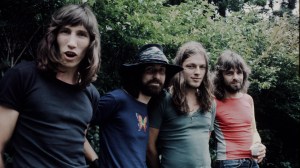
(MANDATORY CREDIT Koh Hasebe/Shinko Music/Getty Images) Pink Floyd live at Hakone Aphrodite, Kanagawa, August 6, 1971. (Photo by Koh Hasebe/Shinko Music/Getty Images) -
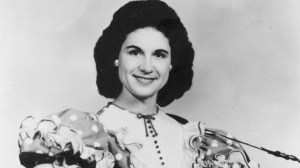
CIRCA 1959: Country singer Kitty Wells poses for a portrait holding an acoustic guitar in circa 1959. (Photo by Michael Ochs Archives/Getty Images) -
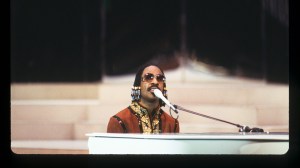
1978 AMERICAN MUSIC AWARDS – Broadcast Coverage – Airdate: January 16, 1978. (Photo by ABC Photo Archives/Disney General Entertainment Content via Getty Images) STEVIE WONDER, WINNER FAVORITE SOUL/R&B MALE ARTIST -
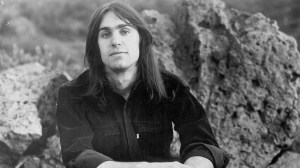
CIRCA 1973: Singer/songwriter Dan Fogelberg poses for a portrait in circa 1973. (Photo by Michael Ochs Archives/Getty Images) -
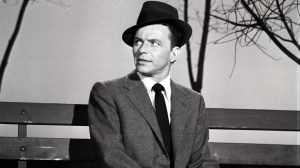
THE FRANK SINATRA SHOW – Airdate: November 8, 1957. (Photo by ABC Photo Archives/Disney General Entertainment Content via Getty Images) FRANK SINATRA -
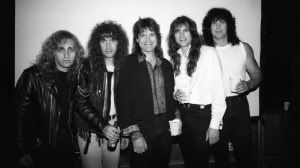
CHANHASSEN, MN – MAY 31: Rock band Alias poses for a portrait at Paisley Park Studios in Chanhassen, Minnesota on May 31, 1990. (Photo by Jim Steinfeldt/Michael Ochs Archives/Getty Images) -
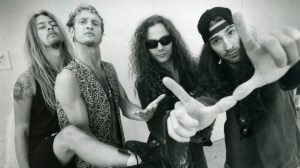
Rock group Alice in Chains. Left to right Jerry Cantrell, guitar; Layne Staley, vocals, Michael Starr, bass and Sean Kinney in Hollywood for rehearsal July 1991. -
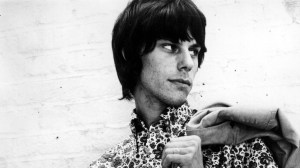
circa 1966: Jeff Beck, lead guitarist with British rhythm and blues group The Yardbirds, models a flowered shirt by John Stephen. (Photo by Keystone/Getty Images)