People used to write for musicals, for films. Songs were standards because the world went out and played them from sheet music and interpreted them. But in a post-Beatles, singer-songwriter world, how do these occasional songs break free and take on their own lives?
I guess the only way I could be objective about it was to look at it and go, “If I hadn’t written that, I would’ve liked to have been the guy who wrote that.” Not that I thought it was going to be a gold record or a hit single or anything, but I could stand back and go, “That’s not bad, not bad for you, Bill.” Even the songs that to most people seem like “He must’ve known this was an obvious hit single,” I had absolutely no idea. “Piano Man” is not a typical hit single. It’s in 6/8 time; it’s five minutes and some seconds long, which doesn’t fit any format, about some guy sitting in a piano bar, totally not a typical pop tune.
At that point I was writing songs and not thinking about me singing them. I decided in my early 20s, “You know what? I’m not going to be a rock star. I don’t look like a rock star, I don’t really have a lot of faith in my own singing abilities. I’m going to be a songwriter. I’m going to write songs that other people will do.” But the guys went, “Well, why don’t you make your own album of your own songs, that way other people will hear your stuff?” Okay. You make the album. Then you’ve got to go on the road and do shows to promote the album. It’s all a very strange way to be a songwriter.
“This is everything I was trying not to do.”
I just didn’t think it was for me. But this happened to coincide with what they call the “singer-songwriter era,” the late ’60s/early ’70s, and boom, it became “Billy Joel the pop star, Billy Joel the rock and roll guy.” Which to this day is very ironic and funny. I was just thinking of other people doing my stuff. You can hear it in those recordings, I’m trying to sound like Rod Stewart, Gordon Lightfoot, Ray Charles, anybody but me, because I didn’t like my own voice. But these things became hits that I never would’ve predicted, like “Piano Man” or “Uptown Girl” – that was an homage to Frankie Valli and the Four Seasons. People say, “You must have known that was going to be a hit,” and I’m going, “No, the Four Seasons were around in the early ’60s, this came out in the ’80s.” There was no way I thought that was going to be a hit.
The same with “The Longest Time,” with that a cappella thing. “Still Rock And Roll To Me,” which became a Number One single, I was just making a commentary on what was going on at the time, which was the whole new wave/punk thing. “We Didn’t Start The Fire” was more of an exercise song. “I’m going to write a list. I turned forty years old; what happened since I was born?” Terrible melody, but I guess it was a catchy chorus. It’s a novelty song – looking back I go, “Yes, but it was a very clever novelty song.”
Do you feel like there’s a separate little island for rock and roll piano players? Are you, Elton, Randy Newman different from the guys with guitars around their necks?
To learn to play the piano, you can’t just know rock and roll. You have to have some basis in other kinds of music, whether it’s classical or church music, spirituals or gospel music or hymns. There’s a lot more that goes into it than just learning a three-chord blues song. So piano players tend to be more sophisticated musicians. I’m a band guy, I was always in a band, and the guitar player could be very, very good, but limited somewhat to what he could express instrumentally. Piano is the emperor of instruments. You can convey a Beethoven symphony on a piano, where it’s almost impossible to do that on the guitar. Piano is traditionally the songwriter’s instrument, until the ’70s when you had guys like James Taylor or Paul Simon writing on guitars, which came from a folk tradition.
So yeah, the piano players are in their own little room. Kind of geeky, we had to take lessons. We wanted to play baseball, but mom made us practice. In a way, we were perceived to be not in the rock and roll tradition. Although you look back and there’s Fats Domino, Jerry Lee Lewis, Little Richard, these guys were beating the crap out of everything. The piano is a percussion instrument, not a string instrument – you bang a piano, you strike a piano. So to me it’s very natural to rock and roll. I beat the crap out of that thing. I break strings I hit it so hard.
You wrote some songs on guitar, right?
Yeah, “The Entertainer” was on the guitar. It’s a different kind of songwriting. There’s a different kind of physics to the instrument that lends itself to different rhythms, to different chord structures, to different ways of writing a melody. I can play a melody on the piano. I can’t play a melody on the guitar, I’m just a chord guy. So all the melodic aspects of a song come from singing it, not from playing it. There are certain rhythms that you can’t play on a piano very easily, it’s very awkward. I love Led Zeppelin, and if you try to play Led Zeppelin on a piano you sound like an idiot.
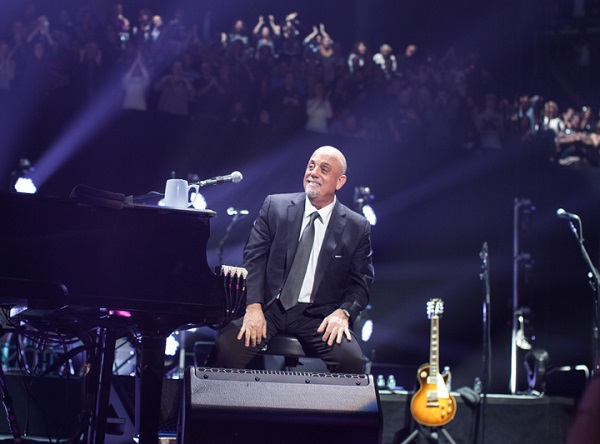
Let’s talk about your residency at Madison Square Garden. Have you figured out what it is yet? What this ongoing platform allows you to do?
Well, it allows me to commute to work [laughs]. From here it’s a hop-skip, that part is nice. When we were talking about it, it was first discussed as a residency. Okay, that’s nice. Then they did a press conference, and they unrolled this logo, “Billy Joel at the Garden,” next to the Knicks, the Rangers, and they’re referring to it as a franchise, which kind of freaked me out at first. “Wait a minute, I’m like the Rangers? I’m like the Knicks?” And I suppose in a way we are. Once a month, we’re going to be there. We’ve already sold twelve shows this year, and we’ll put more shows on sale down the road.
We’re going to change up the shows every night, get more of the obscure and the album tracks, because that keeps it interesting, keeps the band on their toes, keeps us all fresh. I don’t want to do just greatest hits. But I don’t know who the audience is. I’ve never tried to sit down and go “Who’s my audience? Let’s try to figure this out scientifically, and we’ll do 30 percent of unknown songs and 50 percent of hits …” It’s all hit-and-miss. We’ve done shows where I’ve pulled out some obscure songs and we thought they sounded great in soundcheck, and they just lay there like a lox in front of the audience. But that’s a chance you have to take. You never know.
You’ve also been throwing in some Beatles songs, some Motown songs. Obviously that stuff isn’t new for you, since it’s what you were doing back in the beginning.
That’s what we do at soundcheck. We never do my own songs. It drives my sound man crazy. “Eh, I don’t want to play my own stuff. Let’s play Beatles songs, let’s play the Stones, Hendrix, Zeppelin, Motown, soul music.” And the sound guy is sitting there pulling his hair out. “Come on, already, do one of your things!”
On stage, I like to be spontaneous. Something will occur to me and I’ll talk to the audience – it’s not pre-planned, not a series of jokes. Something pops into my head and “You know what I just thought of?” That happens to me musically, too. I’ll just be in the mood to play the piano part at the end of “Layla,” and the band picks it up and they go “Okay, we know how to do this.” I think the audience likes it. And sometimes we’ll fuck it up. The other night in Toronto, we were doing “We Didn’t Start the Fire,” and I screwed up a lyric. And if you screw up one lyric in that song, it’s a train-wreck, the whole thing falls apart. So I said, “Stop the music!” – like Jimmy Durante, “Stop the music!” And the crowd was kind of shocked. I said, “All right, we fucked it up, but at least you know we’re not taped. Madonna couldn’t do this.”
How was revisiting your trip to the Soviet Union with this new package?
It was originally done in documentary form, right after we played in the Soviet Union in the ’80s. For some reason or other, there was an interest in it again – and actually, now that Russia invaded the Ukraine, it is kind of timely. Remember the Cold War? You don’t really want to go back there again. It’s funny watching these politicians stamping their feet, going “Those damn Russians. We better threaten them with an atomic bomb.” Don’t drag us back to that.
But it was one of the most interesting things I’ve ever done – and I’ve had some thrills, I’ve played Yankee Stadium, I’ve played Giants Stadium, Shea Stadium, I’ve toured with Elton John. All over the world, these incredible performances and the very good fortune I’ve had. But that was kind of a watershed moment. It felt like we made a difference, and I saw the power of music. It broke through all these political barriers. They knew America through our pop music, through our blue jeans, through Coca-Cola. That was a better way to know us than through our politicians. And there were a lot of similarities. That audience looked just like an American audience – they played stupid air guitar, they went crazy, they jumped up and down. They’re just like we are! And the music was the medium for that.
More Features
-
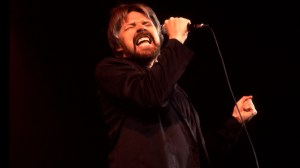
Musician Bob Seger performs at the Poplar Creek Music Theater, Hoffman Estates, Illinois, August 13, 1986. (Photo by Paul Natkin/Getty Images) -
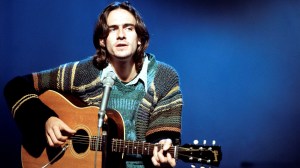
American singer-songwriter James Taylor at a BBC TV studio, London, 20th October 1970. (Photo by Michael Putland/Getty Images) -
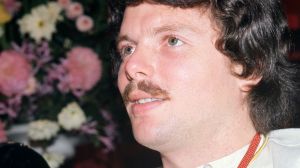
Photo by Jeff Hochberg/Getty Images -
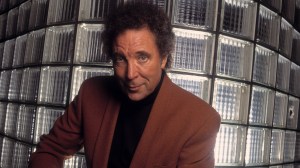
Tom Jones at the Metro in Chicago, Illinois, December 2,1994. (Photo by Paul Natkin/Getty Images) -
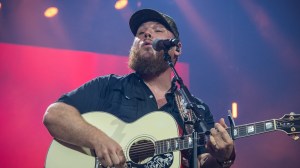
Luke Combs had a huge hit with his cover of Tracy Chapman's "Fast Car" -
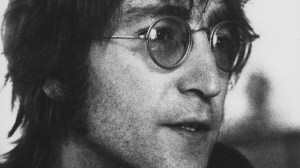
Singer, musician and songwriter John Lennon (1940 – 1980), circa 1970. (Photo by Archive Photos/Getty Images) -
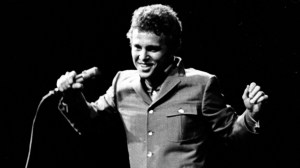
Singer Bobby Vinton attends Madison Square Garden Benefit Concert on June 16, 1966 at Madison Square Garden in New York City. (Photo by Ron Galella/Ron Galella Collection via Getty Images)