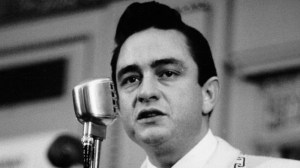
Throughout the history of country music, countless sub-genres have sprouted up beneath its umbrella. One of those is honky-tonk, characterized by lively electric guitars, pulsing drum beats, and lyrics about either heartache or rousing good times (or both.) Historians trace the first use of the word “honky tonk” back to an Al Dexter track from 1936. Al Dexter was the stage name of Clarence Albert Poindexter, born in Jacksonville, Texas, on this day (May 4) in 1905.
The Life and Career of Al Dexter
Al Dexter made his living playing local square dances and church gatherings in his East Texas hometown during the 1920s. Then the Great Depression hit, forcing Dexter to take up a job painting houses to supplement his income.
Videos by American Songwriter
Still, he continued playing local squares dances and private clubs with his band on the side. Striking out on his own in the 1930s, Dexter played guitar, banjo, harmonica, organ and mandolin. Soon he had saved up enough money to open his own tavern in tiny Turnertown, Texas. He also formed his own house band, The Texas Troopers, in 1939.
They say write what you know. As a bar owner in the roughshod, oil-rich East Texas environment, Dexter knew beer drinking, hell-raising, and everything that comes with both those things, good and bad. In 1936, he scored his first hit with “Honky-Tonk Blues”, the track that is believed to have originated the term.
The Massive Success of “Pistol-Packin’ Mama”
When follow-up hits did not immediately follow, Columbia Records urged executive Art Satherley to drop the artist from his roster. Satherley refused—he was convinced that Al Dexter would drop a blockbuster one day.
That blockbuster came in 1943 with Dexter’s self-penned “Pistol Packin’ Mama”. Selling three million copies and topping both the country and pop charts, the song became a cultural phenomenon. The New York Yankees adopted it as their marching chorus for the 1943 season. Meanwhile, “Pistol Packin’ Mama” spawned a 1943 film of the same name, which earned Dexter close to $250,000 in royalties.
Throughout the 1940s, Al Dexter would go on to record a dozen more Top 10 country hits, including the chart-topping “Guitar Polka” (1946), “Rosalita,” “So Long, Pal,” “I’m Losing My Mind Over You,” “Too Late to Worry, Too Blue to Cry” and “Wine, Women and Song.”
In 1975, Ronnie Milsap turned the Dexter track “Too Late to Worry, Too Blue to Cry” into a major hit.
The first country singer to perform on Broadway, Al Dexter was inducted into the Nashville Songwriters Hall of Fame in 1971. He died on Jan. 28, 1984, at age 78 in Lewisville, Texas.
Featured image courtesy of the Nashville Songwriters Hall of Fame
-
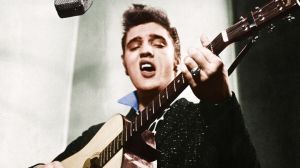
1/1956-Close up of Elvis Presley playing guitar. -
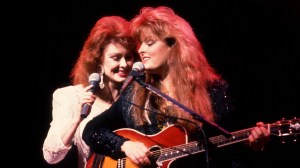
Naomi and Wynonna Judd during The Judds farewell tour. -
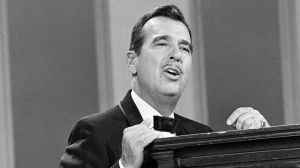
THE DEAN MARTIN SHOW — Episode 15 — Pictured: Tennessee Ernie Ford — (Photo By: NBC) via Getty Images) -
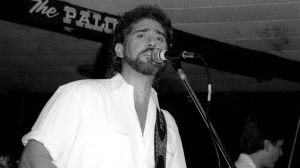
UNSPECIFIED – CIRCA 1970: Photo of Earl Thomas Conley Photo by Michael Ochs Archives/Getty Images -
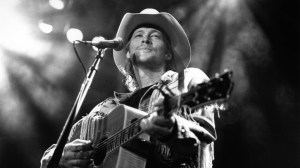
UNITED STATES – JANUARY 01: NASHVILLE Photo of Alan JACKSON, Alan Jackson performing on stage (Photo by Beth Gwinn/Redferns) -
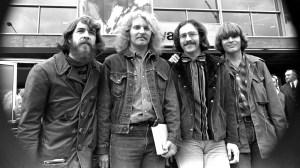
Creedence Clearwater Revival -
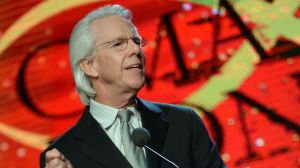
NASHVILLE, TN – Musician Jim Ed Norman speaks onstage during the GMA Honors Celebration and Hall of Fame Induction at the Allen Arena at Lipscomb University on April 29, 2014 in Nashville, Tennessee. (Photo by Rick Diamond/Getty Images for GMA)