Almost since the beginning of rock music history, artists have been recording live albums. In many cases, they turn out to be little more than placeholders in the catalogs of these artists. Perhaps that happens because there’s not much forethought to their creation.
Jackson Browne initially thought of his live album Running On Empty as a distraction to pass the time between his studio albums. But the cleverness and ingenuity of Browne, his band, and his crew helped turn the 1977 record into a live record unlike any other.
Videos by American Songwriter
A New Live Experience
Jackson Browne experienced the extremes in 1976. On the one hand, his album The Pretender was his biggest seller to that point. But he was also dealing with personal tragedy. His wife, Phyllis Major, committed suicide during the making of that record.
Perhaps unwilling to dive into any new songs with weighty topics, Browne thought a live album might be the best way to proceed. He initially thought he’d be re-recording older songs of his that he thought needed some sprucing up. But it soon became apparent that the project came to life when he and his band were doing new songs in front of an audience.
This was far from the usual strategy for live albums, which generally relied on greatest hits. Browne also decided early in the process that he’d try to capture the entirety of the experience of life on the road. To do this, he and his crew had recorders at the ready everywhere, including backstage areas, hotel rooms, and tour buses.
Road Warriors
As for the track list, Browne initially thought of the new songs he wrote for the project, all of which at least tangentially were connected to life on the road, as somehow lesser than the studio album material, which wrestled with heavier themes. He’d be happily disabused of that notion once he saw how people reacted to the material.
Browne also took the opportunity to do some cover songs on record for the first time in his career. Danny O’ Keefe’s “The Road” was recorded half in a hotel room and half on stage. A Holiday Inn rendering of Reverend Gary Davis’ oft-tackled “Cocaine” included casual conversation between the band members.
A medley, that old live performance standby, fittingly closes out the record. First up was “The Load-Out”, a mournful tribute to the roadies, unsung heroes of every concert tour. That segues into a joyous version of “Stay” by Maurice Williams And The Zodiacs, utilized to thank the crowds for supporting the band.
‘Empty’ Promise
As for the original songs, Browne’s soaring talent couldn’t help but connect his complaints about the peripatetic life to feelings relevant to non-rock stars. The title track captured the wanderlust and the inherent disappointment that goes along with it of his generation. And “Love Needs A Heart” offered a piercing look at relationship difficulties.
Running On Empty also showcased Browne’s lighter side on tracks like the comical “Rosie”. Throughout the entire album, he’s buoyed by members of the legendary session group The Section. And trusted multi-instrumentalist and longtime Browne collaborator David Lindley pops up seemingly everywhere with just the right musical touch.
Browne may have intended Running On Empty to bridge the gap between more serious projects. But ended up with a powerful treatise on how the road can wear you down, even with the best of companions around you to prop you up.
(Photo by Ebet Roberts/Redferns)
More Features
-
Photo by Michael Ochs Archives/Getty Images -
UNSPECIFIED – CIRCA 1970: Photo of George Jones Photo by Michael Ochs Archives/Getty Images -
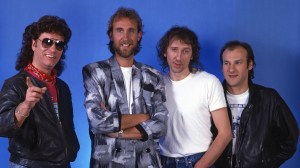
1986: British pop rock group Mike and the Mechanics (Paul Carrack, Adrian Lee, Mike Rutherford, Peter van Hooke, Paul Young) (Photo by BSR Agency/Gentle Look via Getty Images) -
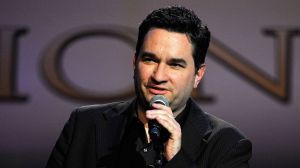
NASHVILLE, TN – Dean Miller accepts the Poet's Award on behalf of his father Roger Miller at the 6th Annual ACM Honors at Ryman Auditorium on September 24, 2012 in Nashville, Tennessee. (Photo by Frederick Breedon IV/Getty Images for ACM) -
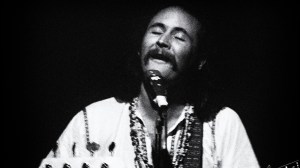
David Crosby of rock band “The Byrds” smiling as he performs in a club in a frontal, waist-high view, eyes half closed, with a mic, circa 1967 in Los Angeles, California. (Photo by Sulfiati Magnuson/Getty Images) -
Photo by Michael Ochs Archives/Getty Images