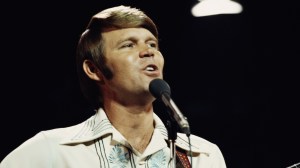
The Band built their reputation on a trio of studio albums, released one a year from 1968 through 1970. Those LPs drained the psychedelia out of rock in favor of an impressive mix of roots genres.
Recreating the sound of those albums live had sometimes proved a struggle for them. But it all came together with a series of shows at the end of 1971, thanks to the assistance of one of music’s great behind-the-scenes geniuses.
Videos by American Songwriter
In ‘Cahoots’ with Toussaint
Released in September 1971, The Band’s Cahoots album found them struggling to match the inspiration of their first three LPs. But one of the undeniable highlights was the song “Life Is A Carnival”, which featured a wild mélange of horns blowing in every direction around the main melody.
The horn arrangement came courtesy of Allen Toussaint. Toussaint had gained notoriety in the music world throughout the 60s as a writer, producer, and arranger who helped define the sound of New Orleans.
The Band were long admirers of his work, especially what he’d done on Yes We Can, a 1970 album by Lee Dorsey. Although Toussaint hadn’t even heard of The Band when Robbie Robertson called him, he agreed to arrange the horns on “Life Is A Carnival”. The members of The Band enjoyed working with him so much that they jumped at the opportunity to do so again just a few months later.
Horns Up
Finishing off a tour in support of Cahoots, The Band scheduled a residency at the Academy of Music in New York City for the last four nights of 1971. The group decided that they wanted to try something special for those shows, and that’s when they contacted Toussaint once again.
Since many of The Band’s classics from the first three albums included horn parts, often played by either multi-instrumentalist Garth Hudson or producer John Simon, they thought that Toussaint’s horn arrangements would be a smooth fit for a run through their back catalog. Toussaint agreed to the task. A few weeks before the shows, he joined The Band in Woodstock, New York, and wrote out horn charts for many of the group’s songs.
Because the decision was made at the eleventh hour, The Band only rehearsed one night with the quintet of ace horn players whom they hired to play Toussaint’s arrangements. But it became clear from the very first blast of horns on a cover of the R&B chestnut “Don’t Do It” that these shows would be something special.
A Live Album for the ‘Ages’
It’s impossible to list all the chill-inducing moments that Toussaint’s arrangements brought to The Band’s material. The set lists were impeccable as well, with The Band noticeably focusing on songs from the first three albums (and mostly avoiding Cahoots) while coming up with well-chosen covers,
Bob Dylan even made a surprise appearance on the last show, just a few minutes after Garth Hudson played a snippet of “Auld Lang Syne” to announce that 1971 had become 1972. For contractual reasons, Dylan’s appearance did not appear on Rock Of Ages, the double live album that emanated from those shows and appeared in August 1972.
Nonetheless, the live document was a triumph, universally hailed as one of the best concert albums ever. With The Band joining forces with Allen Toussaint, we should have expected no less.
More Features
-
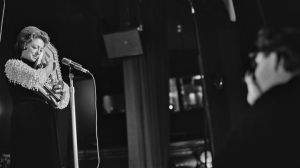
American singer and musician Maybelle Carter (1909-1978) of The Carter Family, playing the autoharp as the band perform live at Columbia Recording Studios, possibly during the recording of 'An Historic Reunion' at Columbia Recording Studios in Nashville, Tennessee, June 1966. Maybelle and her daughters had also performed as The Carter Sisters and Mother Maybelle. (Photo by Don Paulsen/Michael Ochs Archives/Getty Images) -
Photo by American Stock/Hulton Archive/Getty Images -
NASHVILLE, TN – APRIL 24: Singer-songwriter Eric Church and Katherine Blasingame Church attend Best Cellars Wine Dinner hosted by T.J. Martell Foundation on April 24, 2017 in Nashville, Tennessee. (Photo by Jason Davis/Getty Images for T.J. Martell) -
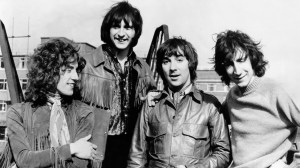
CIRCA 1975: Roger Daltrey, John Entwistle, Keith Moon and Pete Townshend of the rock and roll band "The Who" pose for a portrait in circa 1975. (Photo by Michael Ochs Archives/Getty Images) -
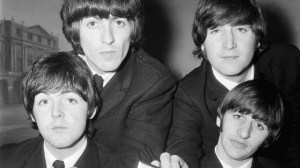
The Beatles pose with their MBEs at a press conference held at the Saville Theatre, London, following their investiture at Buckingham Palace. Top left to right: George Harrison, John Lennon. Bottom: Paul McCartney and Ringo Starr. 26th October 1965. (Photo by Mirrorpix via Getty Images) -
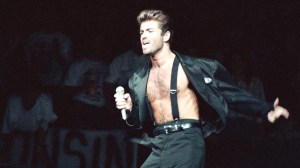
George Michael performing in 1989. (Photo by Jim Steinfeldt/Michael Ochs Archives/Getty Images) -
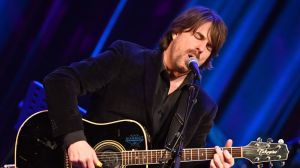
FRANKLIN, TN – Jimmy Wayne performs onstage during A Welby Street Christmas: Hosted by Serene & Pearl at Franklin Theater on December 9, 2016 in Franklin, Tennessee. (Photo by Jason Davis/Getty Images for Bandtwango)