
Growing bored in a band is frustrating, but it’s not exactly a rare phenomenon. And while these feelings can sometimes lead to a band fighting or, worse, breaking up altogether, this general malaise can also become a source of creative inspiration. The difference is finding a way to take that energy and use it to your advantage.
That’s what The Rolling Stones—and, even more specifically, Brian Jones—did when they found themselves in an artistic slump in the mid-1960s. Considering the band was going up against groups like The Beatles, it wouldn’t have been surprising if the sheer pressure alone was enough to make them quit. Instead, they started thinking outside of the box. And thank goodness they did.
Videos by American Songwriter
The song that came out of this experimental boredom was The Stones’ 1966 hit, “Paint It, Black”, which remains one of their more well-known cuts today, thanks to regular rotation on rock radio.
How “Paint It, Black” Helped Reinvigorate the Rolling Stones’ Sound
When The Rolling Stones first came onto the scene, they were more focused on blues-centric rock ‘n’ roll. But just like The Beatles had to evolve from their earliest teenybopper music, The Stones were finding themselves stagnating a few years into their career, too. Brian Jones, the band’s multi-instrumentalist with little songwriting influence over Mick Jagger and Keith Richards, began to grow restless during this time. Eager to find that creative spark once more, Jones began to follow the overarching trend toward Eastern instrumentation.
The mid-1960s saw a rise in instruments like the sitar to create trance-like, droning backdrops for increasingly psychedelic lyrics. The Beatles jumped on this bandwagon in 1965 with the release of their sitar-heavy “Norwegian Wood (This Bird Has Flown)”. One year later, Jones helped The Rolling Stones do the same thing with his sitar feature on “Paint It, Black” from Aftermath.
Based on chart performance alone, the track was a tremendous success. “Paint It, Black” topped the Billboard Hot 100 in the United States and in the band’s native United Kingdom. It also hit the Top 10 throughout Europe and parts of Australasia.
Ultimately, that boredom turned out to be just what the band needed. The use of Eastern instrumentation helped link the band to the year’s freshest, most attractive trends. Suddenly, The Stones found themselves on a more level playing field with The Beatles as hippies and psych-rock lovers joined The Stones’ rock ‘n’ roll fan base.
Photo by King Collection/Avalon/Getty Images
More Behind The Song
-
UNSPECIFIED – JANUARY 01: Photo of Huey LEWIS & The News; (Photo by David Redfern/Redferns) -
Photo by Fireshot/Universal Images Group via Getty Images -
American Country musician Randy Travis plays guitar as he performs onstage at the Wisconsin State Fair, Milwaukee, Wisconsin, July 15, 1988. (Photo by Paul Natkin/Getty Images) -
UNIVERSAL CITY, CA – MAY 3: Singer Tim McGrawl attends the 35th Annual Academy of Country Music Awards on May 3, 2000 at the Universal Amphitheatre in Universal City, California. (Photo by Ron Galella, Ltd./Ron Galella Collection via Getty Images) -

American country and western music singer Collin Raye performs at the Rialto Theater in Joliet, Illinois, November 25, 1996. (Photo by Paul Natkin/Getty Images) -

NASHVILLE, TN – NOVEMBER 08: (FOR EDITORIAL USE ONLY) Miranda Lambert performs onstage during the 51st annual CMA Awards at the Bridgestone Arena on November 8, 2017 in Nashville, Tennessee. (Photo by Terry Wyatt/FilmMagic) -
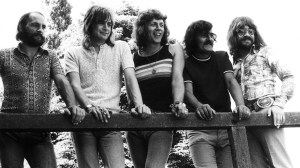
English pop group The Moody Blues, group portrait, 1972, (L-R) Mike Pinder, Justin Hayward, John Lodge, Ray Thomas and Graeme Edge. (Photo by Michael Putland/Getty Images) -
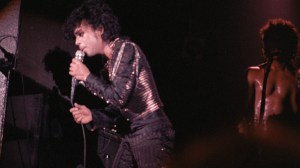
MINNEAPOLIS – AUGUST 3: Prince performs a benefit concert for the Minnesota Dance Theatre at First Avenue nightclub in Minneapolis, Minnesota on August 3, 1983. (Photo by Jim Steinfeldt/Michael Ochs Archives/Getty Images)