
Hard times reveal a lot about a person: what’s important to them, what their biggest fears and desires are, and how they handle interpersonal relationships. And in the late 1970s, Emmylou Harris, Dolly Parton, and Porter Wagoner were in the middle of figuring out all three about one another. The song around which this love triangle formed, so to speak, was Harris’ Top 10 hit from 1977, “To Daddy”.
Harris released “To Daddy” as a single in December 1977 with “Tulsa Queen” as the B-side. The track later appeared on her 1978 album, Quarter Moon In A Ten Cent Town. Much like the rest of her catalogue, Harris’ interpretation of the song about a neglected wife withstanding mistreatment from her husband for the sake of her children, then eventually leaving when the kids are older, sounds heartbreakingly authentic. She sings the words as if she’s the one who wrote them.
Videos by American Songwriter
In reality, Dolly Parton is the one who wrote “To Daddy”. And she was just about to record it with her long-time duet partner, Porter Wagoner, when Harris asked—multiple times—to record the song herself. The song was a major career boost for Harris. And it turned out to be quite the validating experience for Parton, too.
Both Women Solidified Their Careers With “To Daddy”
For Emmylou Harris, getting a Top 10 hit that was written by Dolly Parton was a significant career milestone. Although the women were contemporaries starting in the 1970s, Parton was technically part of the previous generation of country music singers. She paved the way for artists like Harris, and the fact that Harris was able to sing Parton’s song and take it to the top of the charts effectively authenticated Harris’ place in the country music world. It did for Parton, too.
As she explained in Dolly Parton, Songteller, her decision to allow Harris to record “To Daddy” angered Porter Wagoner. “That’s one of the biggest fights that Porter and I ever had,” she recalled. “After everybody left, he said, ‘What the hell do you think you’re doing? You can’t give her that song.’ I said, ‘Yes, I can, because it’s my song, and because I’m trying to build myself up as a songwriter.’ We fought that out. She got the song, and it went to the top of the charts. And I’m as proud of that as I am of anything I’ve ever done.”
Although it caused a row with her duet partner, Parton took the experience as a confirmation that her top priority was being a songwriter, not a recording artist. “To Daddy” proved to be an empowering song for all the women involved: the mother in the story, seeking a more caring kind of love, Harris, establishing herself as a prominent country star, and Parton, who recommitted herself to her one true musical passion.
Photo by Jorgen Angel/Redferns
More Behind The Song
-

American country and western music singer Collin Raye performs at the Rialto Theater in Joliet, Illinois, November 25, 1996. (Photo by Paul Natkin/Getty Images) -
NASHVILLE, TN – NOVEMBER 08: (FOR EDITORIAL USE ONLY) Miranda Lambert performs onstage during the 51st annual CMA Awards at the Bridgestone Arena on November 8, 2017 in Nashville, Tennessee. (Photo by Terry Wyatt/FilmMagic) -
English pop group The Moody Blues, group portrait, 1972, (L-R) Mike Pinder, Justin Hayward, John Lodge, Ray Thomas and Graeme Edge. (Photo by Michael Putland/Getty Images) -
MINNEAPOLIS – AUGUST 3: Prince performs a benefit concert for the Minnesota Dance Theatre at First Avenue nightclub in Minneapolis, Minnesota on August 3, 1983. (Photo by Jim Steinfeldt/Michael Ochs Archives/Getty Images) -
LOS ANGELES – 1974: Singer Joni Mitchell performs in 1974 in Los Angeles, California. (Photo by Donaldson Collection/Michael Ochs Archives/Getty Images) -
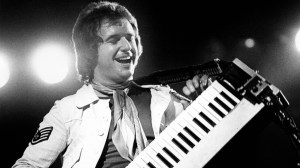
DETROIT, USA – 1st FEBRUARY: Gary Wright performs live on stage in Detroit, Michigan in February 1976. (Photo by Fin Costello/Redferns) -

ASHVILLE, TN – JUNE 07: Bob Dylan appearing on "The Johnny Cash Show" for ABC/TV taped at Ryman Auditorium on June 7, 1969 in Tennessee, Nashville. (Photo by Michael Ochs Archives/Getty Images) -
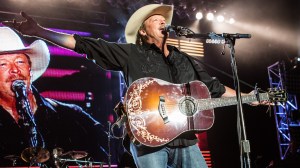
OS ANGELES, CA – JULY 25: Musician Alan Jackson performs at The Greek Theatre on July 25, 2012 in Los Angeles, California. (Photo by Chelsea Lauren/WireImage)