
David Bowie’s greatest career period came in the 1970s with his Berlin Trilogy. The albums Low (1977), “Heroes” (1977), and Lodger (1979) remain some of his most beloved records to date. And some songs from that period, or around it, were way ahead of their time. Let’s look at just a few examples.
“Warszawa” from ‘Low’ (1977)
This mainly instrumental masterpiece, put together by Bowie and Brian Eno, seems to predict the onset of electronic ambient music in the 1970s. Bowie decided to take full advantage of the then-new technological advancements in music, namely the synthesizer. But he didn’t totally abandon old ways of making music, and “Warszawa” features quite a diverse range of sounds and methodologies of performance, with Brian Eno on the Mini-Moog and EMS Synthi, as well as the good ol’ piano. During live performances of this song, Bowie would bring out session artists on guitar, traditional percussion, grand piano, and violin.
Videos by American Songwriter
“Breaking Glass” from ‘Stage’ (1978)
Written by Bowie, George Murray, and Dennis Davis, this iconic art rock song was originally a track on Low but was reworked for the live album Stage. I picked that version for this list because it’s so much more explosive and interesting than the Low version, in my opinion. It’s a short song, one that is incredibly minimalist. And yet, it easily sounds like it’s from the new wave era at its peak, rather than its beginning. I’m not surprised that this one became a go-to for setlists performed on a number of tours, including the Isolar II and Heathen tours.
“Look Back In Anger” from ‘Lodger’ (1979)
Most remember this Lodger classic for its killer guitar solo, a la Carlos Alomar. I remember it for sounding like an alternative rock song before alternative rock was even really a thing. David Bowie was doing things in the 1970s that easily wouldn’t be heard of again until the late 1980s or 1990s.
A heavier live version of “Look Back In Anger” would later make it to his Earthling and Heathen tours in the 1990s. Bowie was always adapting and changing, each time without compromising his artistic integrity. Today’s musicians could find some inspiration in that.
(Photo by John Lynn Kirk/Redferns/Hulton Archive/Getty Images)
More The List
-
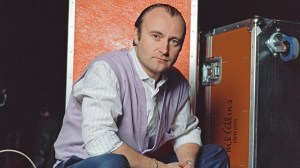
Phil Collins seen here following rehearsals in a London studio for his forthcoming Seriously tour, which begins in Japan. 14th February 1990 (Photo by Steve Woods/Mirrorpix via Getty Images) -
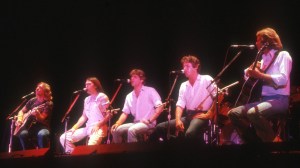
(L-R) Joe Walsh, Timothy B. Schmit, Glenn Frey, Don Henley and Don Felder of the rock band "Eagles" performing onstage in 1980. (Photo by Michael Ochs Archives/Getty Images) -
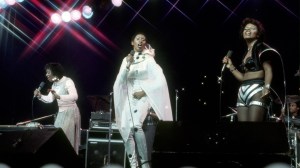
LOS ANGELES – CIRCA 1974: Singer Patti Labelle performs onstage with her group LaBelle in circa 1974 in Los Angeles, California. Also in the group were former Bluebelles, Sarah Dash and Nona Hendryx. (Photo by Michael Ochs Archives/Getty Images) -
Photo by Rick Diamond/WireImage for BMI Nashville -
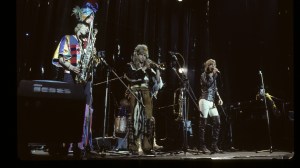
IN CONCERT – From London – Shoot Date: June 13, 1974. (Photo by ABC Photo Archives/ABC via Getty Images) BLUE SWEDE -
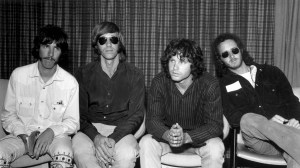
3rd September 1968: American psychedelic rock band, The Doors during a press conference at Heathrow Airport, London (left to right); drummer John Densmore, keyboard player Ray Mansarek, vocalist Jim Morrison (1943 – 1971) and guitarist Robby Krieger. (Photo by Central Press/Getty Images) -
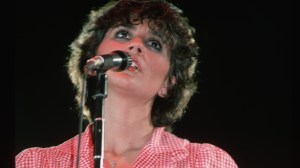
Original Caption) : 1980-Pop singer Linda Ronstadt is shown singing on stage, holding the microphone stand. She wears a gingham shirt with a tie front and askirt with flowers on it in this waist-up portrait. (Photo by Lynn Goldsmith/Corbis/VCG via Getty Images) -
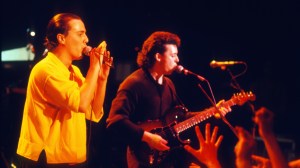
Tears for Fears – Koninklijk Circus – Brussel – Belgium – 21/04/1985 Roland Orzabal, Curt Smith Photo gie Knaeps