
Some songs have the ability to change the way you think. With lyrics, melodies, and rhythms, they provide the stuff to make a person wonder. Then that musing bubbles up into real change, or new behaviors.
Here below, we wanted to highlight three standout songs from back in the day that were able to do just that. Indeed, these are three one-hit wonders from the 1960s that changed music history forever.
Videos by American Songwriter
“In-A-Gadda-Da-Vida” by Iron Butterfly from ‘In-A-Gadda-Da-Vida’ (1968)
With “In-A-Gadda-Da-Vida”, Iron Butterfly helped to establish heavy metal music. The dark, hard-rocking track was one of the first of its kind. It sets a mood. It feels like it’s 1,000,000 pounds. Indeed, the song is not like others of its time. It’s heftier than a Jimi Hendrix track. It’s much more brooding than a tune from The Beatles or The Rolling Stones. And it’s like darkness put to rhythm. And before Iron Butterfly, there wasn’t much like it in your favorite music stores.
“Harper Valley P.T.A.” by Jeannie C. Riley from ‘Harper Valley P.T.A.’ (1968)
Protest music has long been important. And in 1968, Jeannie C. Riley took it to a new level. The country artist brought protest music to the heartland, but it wasn’t about some foreign war; it wasn’t about some president of the United States. No, it was about a smaller, more domestic issue. It was about the Harper Valley P.T.A. and the censorship it fostered. That was new stuff in its day. Not only that, but the popularity of the country hit made Riley the first woman to hit No. 1 on the Billboard Hot 100 and Hot Country Singles charts with the same song. It would take 13 years for anyone to do that again (Dolly Parton did it with her song, “9 To 5”).
“Angel Of The Morning” by Merrilee Rush & The Turnabouts from ‘Angel Of The Morning’ (1968)
This hit single from Merrilee Rush turned a one-night stand on its head. So often audiences heard the story from the guy’s perspective. How he charmed some gal and then slipped out in the early morning before she woke up. Well, this song does the opposite. It tells the story from the woman’s perspective, how she slips out in the morning. How she takes ownership of her feelings, body, and afternoon. That was new stuff back in the day.
Photo by © Hulton-Deutsch Collection/CORBIS/Corbis via Getty Images
More The List
-
UNSPECIFIED – CIRCA 1970: Photo of KC & Sunshine Band Photo by Michael Ochs Archives/Getty Images -
Photo by Michael Putland/Getty Images -
LOS ANGELES – AUGUST 22: American folk-pop musicians (from left) Art Garfunkel and Paul Simon, of the duo Simon and Garfunkel, sing and play guitar as they perform on the CBS variety program 'The Red Skelton Hour,' USA, August 22, 1966. (Photo by CBS via Getty Images) -
NASHVILLE – CIRCA 1950: Country singer Hank Williams poses for a portrait circa 1950 in Nashville Tennessee. (Photo by Michael Ochs Archives/Getty Images) -
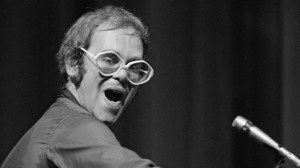
English singer-songwriter Elton John performing at Portsmouth Guildhall, 26th August 1972. (Photo by Michael Putland/Getty Images) -

NEW YORK, NEW YORK – DECEMBER 15: Hayley Williams performs onstage during The Ally Coalition's 11th Annual Talent Show at NYU Skirball Center on December 15, 2025 in New York City. (Photo by Valerie Terranova/Getty Images) -
Photo by Lester Cohen/Getty Images