
Not all folk anthems make it to the top of the charts. However, their message can often outlast that of other songs. Here are a few songs from the 60s that still give us chills when we listen. The crazy thing is that they weren’t even Top 10 hits.
“A Change Is Gonna Come” by Sam Cooke
“A Change Is Gonna Come” was easily one of the biggest anthems of the civil rights movement. Ironically, it actually wasn’t a big commercial hit for Sam Cooke. The song, which was inspired by Cooke’s personal experiences with injustice, only peaked at No. 31 on Billboard. In 1963, Cooke made reservations for him and his wife at a motel in Louisiana. When they actually showed up, they were told there was no space available. Cooke got upset and was eventually arrested by police for “disturbing the peace.” When writing this song, he was also inspired by songs like “Blowin’ In The Wind” by Bob Dylan.
Videos by American Songwriter
“The Times They Are A-Changin’” by Bob Dylan
This is one of Dylan’s most revered songs, but when it first came out, “The Times They Are A-Changin’” actually wasn’t released in the US. Therefore, it didn’t have an opportunity to chart there. As Dylan told Cameron Crowe (in the liner notes of the Biograph album), this song was written as “a song with a purpose.” I think that is what it certainly became.
“…It was influenced, of course, by the Irish and Scottish ballads …’Come All Ye Bold Highway Men’, ‘Come All Ye Tender Hearted Maidens’. I wanted to write a big song, with short concise verses that piled up on each other in a hypnotic way,” he shared. “The civil rights movement and the folk music movement were pretty close for a while and allied together at that time.”
“Little Boxes” by Pete Seeger
This song was originally written by Malvina Reynolds, who wanted to write about the lack of uniqueness in the housing market. Particularly in suburbs, where all the houses were laid out identically. Pete Seeger, who is known for singing songs like “We Shall Overcome”, was a friend of Reynolds. He was the first to release this one. His version made it to No. 70 on the Billboard Hot 100.
Photo by: Michael Ochs Archives/Getty Images
More The List
-

Photo by Jim Wilson/The Boston Globe via Getty Images -
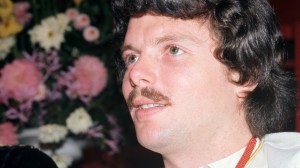
LONDON, ENGLAND – 1966: American singer and songwriter Scott McKenzie (1939-2012) poses for a portrait circa 1966 in London, England. (Photo by Jeff Hochberg/Getty Images) -
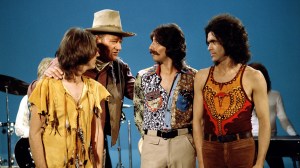
The band, Three Dog Night (from left: Cory Wells, Chuck Negron and Danny Hutton) being visited on stage by John Wayne (in hat) on THE GLEN CAMPBELL GOODTIME HOUR. Image dated September 14, 1971. Copyright ©1971 CBS Broadcasting Inc. All Rights Reserved. Credit: CBS Photo Archive. -
Photo by Graphic House/Getty Images -
Photo by Lynn Goldsmith/Corbis/VCG via Getty Images -
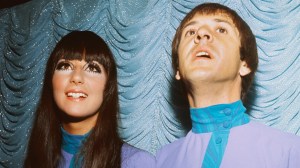
American vocal duo Sonny & Cher, aka husband and wife Sonny Bono and Cher, circa 1965. (Photo by Silver Screen Collection/Getty Images) -
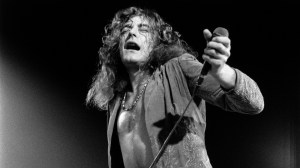
DENMARK – MARCH 02: Photo of LED ZEPPELIN; Robert Plant – Led Zeppelin, March 2, 1973 in Copenhagen, Denmark (Photo by Jorgen Angel/Redferns) -

Photo by Michael Ochs Archives/Getty Images