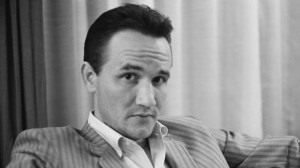
One year and two months after the world lost the de facto King of Rock ‘n’ Roll from the American South, Elvis Presley, the world lost a man considered to be the Australian King of Rock ‘n’ Roll, Johnny O’Keefe. And like his American counterpart, O’Keefe’s death came as an unsurprising tragedy after a rollercoaster of a career that was at once massively influential and incredibly divisive.
O’Keefe, also known as J.O.K. or “The Wild One,” was the first bona fide rock star to come out of the land down under. He single-handedly put his home country on the rock ‘n’ roll map as the first Aussie to top Australian charts and the first to tour the United States. The Wild One’s music mirrored the early rock ‘n’ roll sound of the late 1950s and early 1960s—back when artists like Bill Haley and Chuck Berry dominated the music scene, while future stars, like The Beatles, pored over their records in their childhood homes.
Videos by American Songwriter
Like his contemporaries, O’Keefe’s greatest strength was his unstoppable stage presence. His music was straightforward, and his talent was not necessarily conservatorial. But what he lacked in traditional skill, he made up for in charisma. Sadly, like so many other ultra-charismatic public figures in pop culture history, his professional fall from grace was ubiquitous and swift.
Johnny O’Keefe Had a Rollercoaster of a Rock ‘n’ Roll Career
Johnny O’Keefe became famous for hits like “Wild One”, “She’s My Baby”, “I’m Counting On You”, and “Real World Child.” The latter was was covered by Iggy Pop in 1986.
In the midst of his meteoric ascent to fame in the late 1950s, tragedy struck the rising star when he, his bandmate, and his bandmate’s wife got into a car accident that left all three passengers severely injured. Retroactive speculation has suggested this crash led to O’Keefe’s mental health struggles in the years to come, which contributed to his death in 1978.
Between the 1960 car accident and his death, O’Keefe continued to work in the entertainment industry. Like so many other artists of the early 1960s, O’Keefe’s popularity waned as Beatlemania began to take hold. An attempt to bolster the Aussie singer’s career with a variety television show turned sour when O’Keefe became outspoken about his disdain for and exclusion of “long hairs” on his program. These curmudgeonly opinions alienated O’Keefe from potential younger fans, though he saw some relative chart success in the 1970s. This was short-lived, however.
The Wild One met his end at 43 on October 6, 1978. He died of cardiovascular collapse, which was related to his use of barbiturates and methaqualone. Posthumous honors focus on O’Keefe’s impressive contributions to rock ‘n’ roll, both generally speaking and specifically within the Australian music market.
Photo by The Sydney Morning Herald/Fairfax Media via Getty Images
-
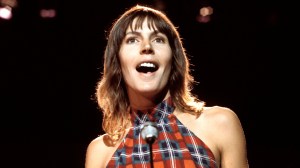
Australian-American singer, songwriter, author, actress, and activist Helen Reddy (1941 – 2020), 1975. (Photo by Tony Russell/Redferns) -
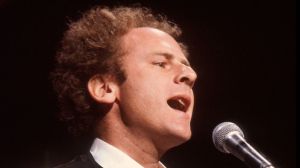
Art Garfunkel performs on TV show, USA, 1975. (Photo by Michael Putland/Getty Images) -
EUGENE, OR – (EDITORS NOTE: Multiple exposure made in camera) Phil Lesh of the Grateful Dead performs at Autzen Stadium on June 23, 1990 in Eugene, Oregon. (Photo by Tim Mosenfelder/Getty Images) -
American country comedienne Minnie Pearl (1912 – 1996) performing, circa 1970. (Photo by Silver Screen Collection/Getty Images) -
British musicians Mick Jagger (left) and Bill Wyman of the Rolling Stones performs on stage during the band's 'Steel Wheels' tour, late 1989. (Photo by Paul Natkin/Getty Images) -
UNSPECIFIED – CIRCA 1970: Photo of Jim Reeves Photo by Michael Ochs Archives/Getty Images -
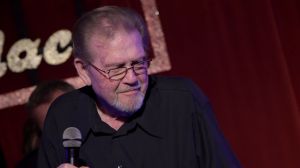
NASHVILLE, TN – Singer/Songwriter Whitey Shafer performs during the All-Star Whitey Shafer Benefit, Hosted By Moe Bandy at The Nashville Palace on March 18, 2015 in Nashville, Tennessee. (Photo by Rick Diamond/Getty Images for Webster PR)