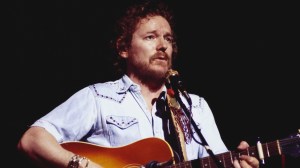
On this day (November 19) in 1979, Kenny Rogers reigned atop the Billboard Top Country Albums chart with Kenny, his eighth studio album. Released in September of that year, Kenny followed two massively successful solo projects from the Houston-born singer. The first was 1977’s Kenny Rogers, which spawned his breakout smash “Lucille”. Next came 1978’s The Gambler, which introduced his signature hit in the title track.
This Album Helped Solidify Kenny Rogers’ Crossover Star Status
After years of struggling to break through as a solo act following his departure from country-rock group The First Edition, Kenny Rogers had finally assumed his place on top of the music industry.
Videos by American Songwriter
Kenny kept that hot streak alive, spending a record-breaking 25 weeks on the U.S. country albums chart. In addition to ruling the country albums chart, it also climbed to No. 5 on the Billboard Hot 100, giving Rogers his first Top 10 pop album.
It also produced two major chart-topping singles in “You Decorated My Life” and “Coward of the County”.
Penned by Debbie Hupp and Bob Morrison, “You Decorated My Life” is a heartfelt accounting of how a woman changed a man’s life for the better. In 2025, the tender ballad came in at No. 10 on Billboard’s Top Country Love Songs of All Time. And it didn’t only resonate with country audiences. “You Decorated My Life” also climbed to No. 7 on the U.S. pop chart and No. 2 on the adult contemporary listings.
It also snagged Best Country Song honors at the 1980 Grammy Awards. This marked Morrison’s only career Grammy Award. His other hits included Johnny Lee’s Urban Cowboy smash “Lookin’ for Love” and Conway Twitty’s 1985 chart-topper “Don’t Call Him a Cowboy”.
“Coward of the County”
The album’s second single, “Coward of the County”, was one of several Kenny Rogers hits to inspire a silver-screen adaptation.
Written by Roger Bowling and Billy Edd Wheeler, the “coward” in question is a man named Tommy, who swore off violence after his father died in prison. Son, you don’t have to fight to be a man, Tommy’s dying father proclaimed.
This nonviolent attitude was widely interpreted as cowardice—by everyone except Tommy’s loving girlfriend, Becky. Ultimately, Becky’s sexual assault at the hands of the three Gatlin brothers serves as the catalyst for Tommy’s change of heart.
Tommy shows up at the bar where the Gatlin brothers are hanging out, locking the door behind him. Unleashing 20 years of bottled-up aggression, he “let ’em have it all,” Rogers sings.
By the time Tommy turns to leave, “not a Gatlin boy was standing.”
[RELATED: Willie Nelson Turned Down What Became One of Kenny Rogers’ Signature Songs in 1978]
Rogers turned “Coward of the County” into a major crossover hit, climbing to No. 3 on the U.S. pop chart. It also topped the charts in Canada, the United Kingdom, and Ireland.
Featured image by Michael Ochs Archives/Getty Images
-

Steel Guitar Hall of Fame member John Hughey, December 27, 1933 – November 18, 2007 (Photo courtesy of Facebook) -

Photo taken in Dallas just before the Dixie Chicks released their album "Shouldn't a Told You That." From left, Emily Erwin, Laura Lynch and Martie Erwin. (Ralph Lauer/Fort Worth Star-Telegram/Tribune News Service via Getty Images) -
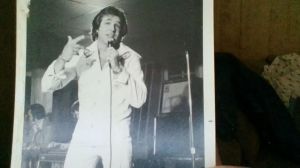
Country singer Jacky Ward, born November 18, 1946, in Groveton, Texas. (Photo Country singer Jacky Ward, born November 18, 1946, in Groveton, Texas. (Photo courtesy of Facebook)) -

1959: Country singer of Marty Robbins poses for a Warner Bros publicity still for the movie 'The Hanging Tree' for which Robbins sang the title song. (Photo by Warner Bros/Michael Ochs Archives/Getty Images)