Voice has been my primary instrument for well over two decades now, which means that whenever I’m listening to music, my attention is almost always on the singer. While I will admit that a vocal delivery can make or break a song for me, I will also admit that my taste in what constitutes a “good” vocal delivery is entirely subjective. There’s no reason why I should love Neil Young’s voice but can hardly tolerate Bob Dylan’s. C’est la vie.
But maybe you and I have the same taste in singers. Stranger things have happened! Let’s compare notes: here are seven vocal performances from the 1970s that continue to blow my mind, no matter how many times I’ve heard them.
Videos by American Songwriter
“You’re My Best Friend” by Queen
The more obvious Queen choice for this list might be “Bohemian Rhapsody”, but I’d argue that the John Deacon-penned “You’re My Best Friend”, also from A Night At The Opera, shows even more of Freddie Mercury’s musicality. The inimitable frontman’s voice oscillates between sweet and tender and powerful and raspy, two vocal colors that seem like they should belong to totally different humans. Yet, there Freddie was, pulling off the seemingly impossible.
“Lovin’ You” by Minnie Riperton
Back when Mariah Carey was still knee-high on a grasshopper, Minnie Riperton was showing off her phenomenal whistle tones in the 1974 track “Lovin’ You”. The vocal range necessary to pull off Riperton’s hit song in-key is a C#4 to F#6. That’s just bonkers, no matter which way you slice it. The fact that she co-wrote the song with her daughter, Maya Rudolph, in mind is just the heartwarming cherry on top.
“Great Gig In The Sky” by Pink Floyd
The fact that Pink Floyd hardly said three words to Clare Torry after she came out of the vocal booth, where she was recording “Great Gig In The Sky” for Dark Side Of The Moon, says more about how awkward musicians can be than her vocal delivery. I would argue that her vocal embodiment of pain and languishing is one of the most impressive vocal performances of the 1970s, period.
“Stairway To Heaven” by Led Zeppelin
This entry on the list of vocal performances of the 1970s requires an asterisk: I am specifically talking about the live version of “Stairway To Heaven” from the concert film, The Song Remains The Same. Let’s just say I was having an, er, mind-altering experience whenever I first heard Robert Plant purr into the microphone, “Does anybody remember laughter?” The ad-lib was so short, but it hit me like a ton of bricks.
“Ohio” by Crosby, Stills, Nash & Young
Everything about Crosby, Stills, Nash & Young’s vocal performance on “Ohio”, a protest song that came to define the 1970s, gives me goosebumps. From the powerful harmonies in the chorus to David Crosby’s pained shouts at the end of the song, you can feel how all four musicians were reeling from the tragedy that happened at the Kent State shooting on May 4, 1970. It captures their frustration and sorrow with painful clarity.
“Coyote” by Joni Mitchell
Joni Mitchell’s 1976 offering from Hejira, “Coyote”, is one of the best examples I know of the Canadian singer-songwriter living in her own musical world. Having tried to cover the song myself plenty of times, I am consistently blown away at how her vocal delivery seems to defy all standard concepts of time and rhythm. It’s as if she were telling this story completely off the cuff without losing an inch of musicality. Truly incredible.
“Vienna” by Billy Joel
While this Billy Joel track might not be the most agreed-upon pick, I would argue that “Vienna” is well-deserving of a spot. It is my list, after all. From a vocalist’s perspective, the song is surprisingly difficult to sing, with plenty of wide leaps and long phrasing that seem virtually impossible in some keys. Yet, he pulls off these feats with a sense of down-to-earth humility that feels like getting a pep talk from your older brother.
Photo by Brad Elterman/FilmMagic
More The List
-
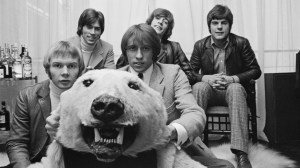
Pop group the Bee Gees posed with a stuffed polar bear in an office in London circa April 1968. Members of the band are, from left, Colin Petersen, Barry Gibb, Maurice Gibb (1949-2003), Robin Gibb (1949-2012) and Vince Melouney. (Photo by Ivan Keeman/Redferns) -
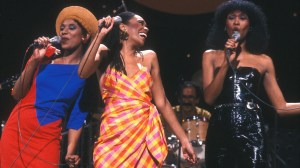
The Pointer Sisters (Photo by Jeffrey Mayer/WireImage) -
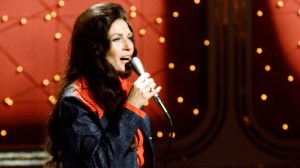
THE MIDNIGHT SPECIAL — Episode 7 — Pictured: Loretta Lynn — (Photo by: Gary Null/NBC via Getty Images) -
Photo by Hulton Archive/Getty Images -
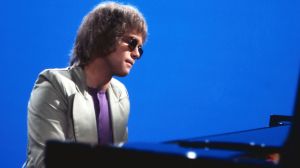
4-3-2-1 Hot and Sweet, Musiksendung, Deutschland 1970, Gaststar: Elton John. (Photo by Arthur Grimm/United Archives via Getty Images)