Your cart is currently empty!



How Facing Her Past and Accepting Outside Voices Led Ashley McBryde to Her Best Album Yet
Enter a prolonged conversation with Ashley McBryde, as American Songwriter did recently to talk about her marvelous new album Wild, and you’re bound to hear unique analogies. The rhetorical asides will make it abundantly clear how she has thrived as one of country music’s most indelible songwriting and performing talents via decorated albums like Girl Going Nowhere and Never Will.
Videos by American Songwriter
For example, a song that a songwriter doesn’t ensure is fine-tuned from start to finish is like a “baby with a stupid haircut.” In explaining her excitement level for people to hear the album, she compares herself to a “love interest in a late-’80s rom-com” screaming out the contents of her heart.
McBryde shows off that cleverness in several of the songs on Wild, her fifth album. Her ultimate goal with the 12-song collection was to present an autobiographical picture of the good and bad in her past that formed who she is today. To articulate those feelings, she occasionally leaned on the words of others to combine with her own songwriting efforts. And she did it all despite the innate scariness of the enterprise.
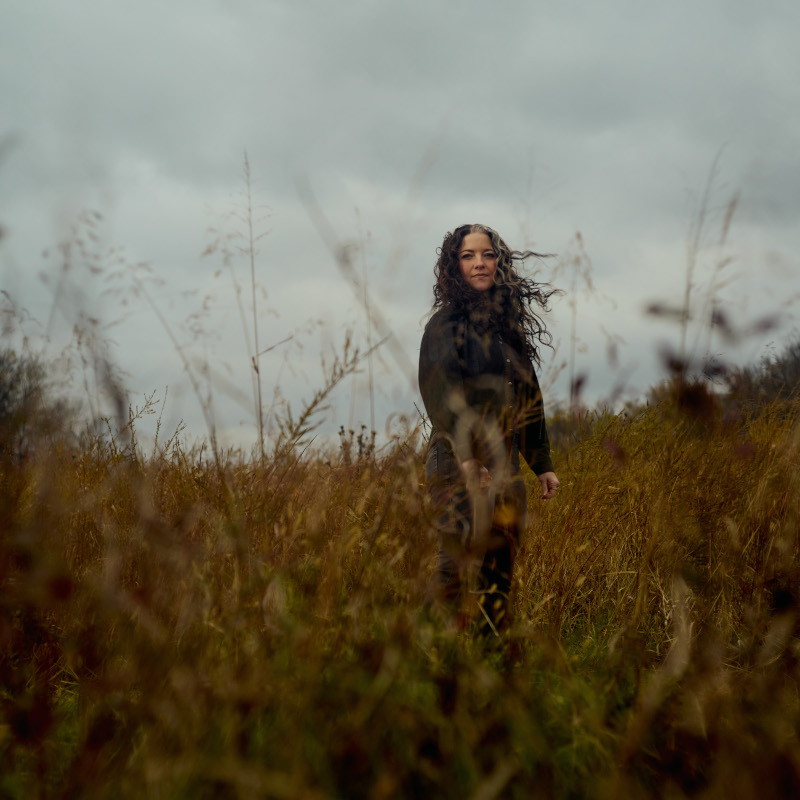
“I’ve written entire albums about people who get in fights in trailer parks and won’t wear their undergarments, or a guy that’s super cool but just happens to be a meth-head,” McBryde tells American Songwriter. “But as we gathered all this together, it was pretty apparent pretty early that there weren’t characters like that here. It’s just me. That means two things. One is, ‘Oh my gosh, everybody is going to know more about me.’ And it’s also, ‘Jesus Christ, that means I’m going to be seen.’ The need to be seen and the fear of being seen became pretty evident.”
And if she was going to bare her soul, she was going all in. Everything was on the table for McBryde, even her past battles with addiction. “I’m a drunk, and I have not had a drink in three years, eight months, and six days,” she says. “And I almost died. That’s such a literal statement. But I didn’t. And surviving it sounds like this.”
Digging Deep
McBryde started to understand what Wild was going to be when she decided that three songs that hadn’t made it to other records would serve as a one-two-three punch at the beginning of this one. “Rattlesnake Preacher,” “Arkansas Mud,” and “Water In The River” start the album with an unfiltered look back at struggles faced and mistakes made. Bad decisions, tried ‘em all and Ain’t enough water in the river to wash me clean are emblematic of the confessional nature of those songs.
[RELATED: Ashley McBryde Brings Entire Opry To Tears With Moving “Bible and a .44” Performance]
“I had to start with those three songs so that you know that this is who I’m from, this is what I’m from, and this is a belief system that caused so much damage,” she says. “And it didn’t work for me. So I think it was cool to really start out with ‘this is who she is and this is where she’s speaking from,’ so that when you get through the rest of the story, you’re like, ‘Of course she has relationship trouble. She was raised by a preacher.’”
Once she had those tracks as a foundation, McBryde was off and running in tell-all mode, facing down alcohol-related demons in songs like “Behind Bars,” “Bottle Told Me So,” and “Ten To Midnight.” “To put yourself back in that cage does kind of suck a little bit,” she admits. “But I think you can treat that sort of like experiential therapy. Put yourself back in that cage and then allow yourself out of it. Writing ‘Bottle Let Me Down’ with Shelley Fairchild and Terry Joe Box, it felt like I was safe to feel all of that stuff and be really honest about some of the crazy, really disturbing, and sometimes comical things that would happen that got super unfunny.”
“Even with ‘Ten To Midnight,’ to say I want to sit across (from) myself at the table, and I want to watch me drink. I want to feel all the rage that I feel at her, and I want to feel all the compassion that I can feel for her. Look back at it and write that. That’s such a gift to have survived it and look back at it. And hopefully it helps somebody else.”
But Wilddoesn’t simply give out warnings and wallow. The title track, written by Jeremy Spillman, Makayla Lynn, and Matraca Berg, focuses on the freedom and limitless potential of youth. It’s one of several examples on the record where outside writers delivered the words to explain something that resonated deep within McBryde.
“There are things about me living like such a heathen that were comical, enjoyable, and delightful,” McBryde says. “When I heard ‘Wild,’ I pictured myself as a kid. And I remember sitting in my bedroom thinking about what I would be like when I grew up. I just knew I was going to wear ripped-up jeans and off-white, cool T-shirts and jean jackets, and I would walk so cool that I would look like I wasn’t even real. I would be so cool that I looked like an animated character. The song ‘Wild’ is about that young version of you that dreams anything is possible. Then I looked at myself, and I was like, ‘I nailed it. The thing I want to be when I grow up, I am.’
“And now I get to sing to that other part of us, because every single one of us has that young ‘us’ still alive. And sometimes we put them to bed. Not only do I hope that song, and the way I interpret it, wake that up in you, but when you come to my show, that’s the version of you I want to sing to. That’s the version of you that I want to see. That’s the ‘Wild’ that calls out to you from a distance. It’s the innocence and the possibility.”
Inner Feelings from Outside Writers
In addition to trying to balance out the lyrical approach, McBryde attempted to offer musical variety as well, especially after the rocking blast delivered by the opening third of the album. “I knew I was going to have to balance that out,” she says. “My bread-and-butter is doing the plinkety-plink, fingerpicking, acoustic stuff. I knew I would need at least one of those. But I didn’t want to overdo it with them. We know I can do that. We’ve done it for four records. I wanted to give those other songs the ability to be balanced but still make sure that statement was made.”
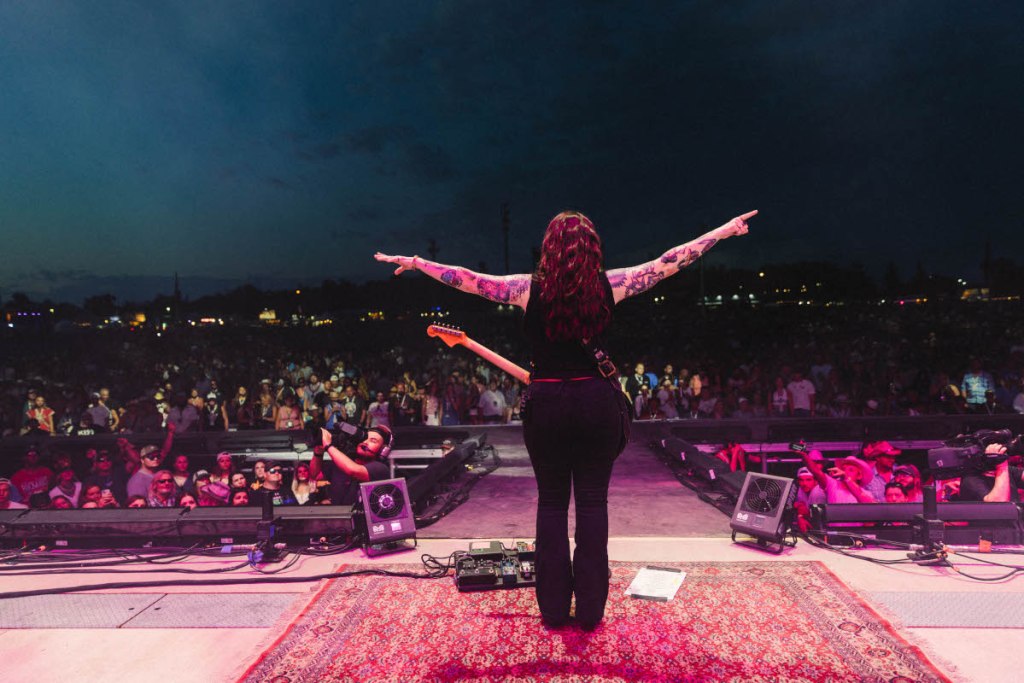
Making that statement required relying on outside writers more than ever before in her career. McBryde remembered the days she was trying to place her own work when going through this process.
“When I first got a publishing deal in 2014, I remember thinking every artist is a writer and every producer is a writer, and nobody listens to what songwriters are doing. And people just wouldn’t cut my stuff. I went to my publishers and said, ‘That’s me now that I was mad about in 2014. I don’t go out and listen to open mics anymore. I don’t have time. I need you to help me find songs that do this, this, and this. These are the feelings we need to have.’ And they gathered a bunch of songs. We had a good old-fashioned pitch meeting and listened to them. They did an amazing job of curating those and bringing them to me.
“And as I listened, the rule was I cannot know who the songwriter is. That way nobody has an advantage because they have 20 hits or a disadvantage because they have none. And I feel really, really good with the mix. I think there are five on here that I didn’t write and six that I did. That feels right. Because just like I’m not the best voice for all the songs that I write, I can be the best voice for something I did not write. Just like when we were younger and we heard a Clint Black song and said, ‘That’s my song, that’s my jam.’ That still exists. I needed to search out these songs so I could hear ‘Wild’ and say, ‘That’s my song. That’s me.’”
Something Wild
McBryde’s career took a while to take off, and she credits that time in the musical wilderness for making her more prepared once her time did come. “I wouldn’t trade playing in bars for over a decade for anything,” she muses. “You have a mediocre guitar and a mediocre sound system, and you go and play bars. And then you get a better guitar and a better sound system and a less shit time slot at a slightly better bar. And then you also play places whose names end in ‘pizza’ and ‘grill.’ And I didn’t have anybody behind a desk telling me if the song was good or not. I knew if a song was good or not because it held a room or didn’t. By the time I was ready to record and have a record deal and a publishing deal and all that stuff, I knew what I was doing because I’d watched it work.”
[RELATED: Ashley McBryde Reveals the Dolly Parton Gift She Treasured for Decades]
Songwriting went hand-in-hand with the recording success she’s fostered over the last decade, especially once she stopped worrying about formulas. “I knew that the songs that I liked when I was writing were ones that only I would cut. Songs like ‘Bible and a .44’ and ‘Girl Goin’ Nowhere.’ Before that, I was writing for a publishing company, and they do things like come in and say, ‘OK, we need a positive uptempo that’s not about drinking and not about staying the night.’ And I’d be like, ‘What are we going to write a song about?’ You’ve got all of these parameters that are really closing in on the playpen. You can’t even get to the ride. Have a good time at the playground, kids, when you can’t even leave the sand pit.”
McBryde also made sure to credit her backing band and her producer, John Osborne, for contributing to the potency of Wild. “I’m so proud of my guys,” she says. “They’re such wonderful players. When you’re hearing this, you’re not just hearing this story. You’re hearing a conversation between the six of us in my band and John Osborne. I’m maybe just realizing it now as I’m telling you this, but that’s what a great record is. It’s a little capture, a snow globe of this amazing conversation between creative people.”
There she goes again, just one more Ashley McBryde analogy to sum up this revelatory new record.
Leave a Reply
Only members can comment. Become a member. Already a member? Log in.