On this day (October 29) in 1946, Peter Allen Greenbaum was born in London, England. Known professionally as Peter Green, his name may not strike a chord for most casual listeners. However, without Peter Green, there would be no Fleetwood Mac. The guitarist co-founded the Grammy-winning rock group in 1967 after a stint with British blues-rock staples John Mayall & the Bluesbreakers — in which he replaced Eric Clapton.
Green led Fleetwood Mac for three albums, guiding the band to mainstream fame with songs such as the instrumental UK chart-topper “Albatross”. Following a years-long battle with his mental health, he left the group after a final performance on May 20, 1970.
Videos by American Songwriter
Today we’re revisiting the life and legacy of Peter Green—who died in 2020—in honor of what would have been his 80th birthday.
About Peter Green: A Blues-Rock Legend
Learning his first chords on a hand-me-down guitar at age 10, Peter Green was booking professional music gigs by age 15.
Drawing from influences including the Shadows’ Hank Marvin, Muddy Waters, and B.B. King, he briefly filled Eric Clapton’s spot in John Mayall and the Bluesbreakers while the future 18-time Grammy winner was away on a trip.
When Clapton left the band for good to form Cream, Mayall hired Green as his replacement. He made his recording debut on the Bluesbreakers’ 1966 album A Hard Road, earning the nickname “The Green God”.
Fleetwood Mac
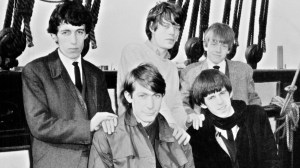
Wanting to remain true to the blues — and fearing Mayall & Co. were moving further from it — Peter Green teamed up with his recently-ousted Bluesbreakers bandmate, Mick Fleetwood, to form their own band.
They enlisted Jeremy Spencer on guitar and Bob Brunning on bass, and Fleetwood Mac was born. By September 1967, John McVie had replaced Brunning. Five months later, Fleetwood Mac released their eponymous debut album, which spent nearly 40 weeks on the British charts.
They followed their debut later that year with Mr. Wonderful, which featured Green’s instrumental composition “Albatross”. The song topped the UK singles chart.
With Green at the helm, Fleetwood Mac gained a reputation for their raucous live performances. In 1969, the band released their third straight top 10 UK album, Then Play On.
The same year, another Green-penned single, “Oh Well”, climbed to No. 2 on the UK singles chart. With its Muddy Waters-inspired title, many critics regard “Oh Well” as one of the earliest marriages between blues rock and heavy metal — an early predecessor to songs like Led Zeppelin’s “Black Dog”.
Leaving Behind a Legacy
The band reached No. 2 a second time in 1969 with “Man of the World”. However, Peter Green’s mental state had begun to shift at this point. He started taking large doses of LSD, sporting white robes and a crucifix around his neck.
Struggling with his mental health and disillusioned by stardom, Green left Fleetwood Mac in May 1970. After releasing a solo album called End of the Game, he virtually vanished from the spotlight. Eventually diagnosed with schizophrenia, Green spent the mid-1970s in and out of psychiatric hospitals.
He resurfaced on the music scene in 1979 with his second solo album, In the Skies. Green released four more solo albums in the early 1980s before forming a blues band called the Peter Green Splinter Group in the late 1990s. The group released solo albums before Green’s exit in 2004.
He began touring again in 2009 under the name Peter Green and Friends.
Peter Green died in his sleep at his home in Essex, England, on July 25, 2020, at age 73. Just five months earlier, Mick Fleetwood had teamed up with Pete Townshend, David Gilmour, Noel Gallagher, Steven Tyler, Kirk Hammett, Billy Gibbons, Christine McVie, and many others to honor Green’s legacy with a special concert at the London Palladium.
[RELATED: 3 Classic Rock Stars Who Quit the Industry at the Height of Their Fame]
“The enormity of our success after Peter left is known and is real. But the more time that passed, I felt, understandably, that the original part of the chemistry that started all this — and Peter Green started and formed Fleetwood Mac — needed to be known and understood,” Fleetwood told Rolling Stone. “It wasn’t me. It wasn’t John. It was Peter.”
Featured image by George Wilkes/Hulton Archive/Getty Images
-
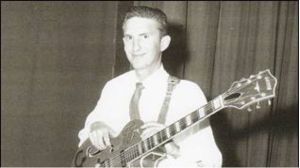
Guitarist Tommy Tomlinson, October 28, 1930 — April 8, 1982. (Photo via Discogs.com) -
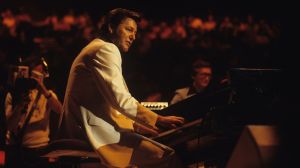
LONDON, UNITED KINGDOM – Pianist Floyd Cramer performs on stage at the Country Music Festival held at Wembley Arena, London in April 1979. (Photo by David Redfern/Redferns) -
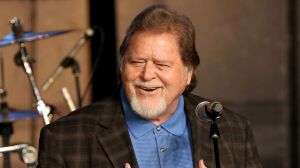
NASHVILLE, TENNESSEE – SEPTEMBER 25: Dallas Frazier performs at "Songs That Tell a Story," the final Marty Stuart Artist-in-Residence Show at Country Music Hall of Fame and Museum on September 25, 2019 in Nashville, Tennessee. (Photo by Terry Wyatt/Getty Images for Country Music Hall of Fame and Museum) -
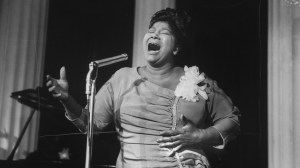
Singer Mahalia Jackson singing at reception in hotel. (Photo by Don Cravens/Getty Images)