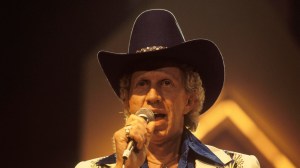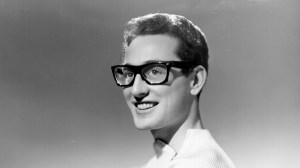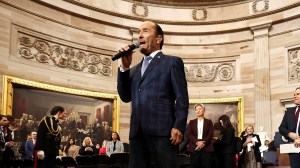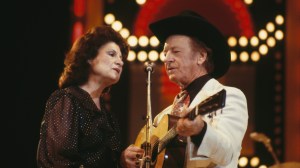
On this day (October 29) in 1937, Sonny Osborne was born in the Eastern Kentucky coalfield town of Thousandsticks. A childhood banjo prodigy, he formed groundbreaking bluegrass duo the Osborne Brothers alongside older brother Bobby—born six years earlier. The sibling pair is perhaps best known for their 1967 hit “Rocky Top”, now a rallying cry for the University of Tennessee Volunteers’ athletic teams. Together, the Osborne Brothers expanded the sonic borders of bluegrass, experimenting with amps, twin harmony banjos, steel guitars, and drums.
After suffering a stroke, Sonny Osborne died on October 24, 2021, at his home in Hendersonville, Tennessee—just five days shy of his 84th birthday. Today, we’re remembering his lasting impact on what would have been his 89th birthday.
Videos by American Songwriter
Music Was Always a Family Affair for Bobby and Sonny Osborne
Like many eastern Kentuckians searching for steady labor, the Osborne family relocated to Dayton, Ohio, in the early 1940s. Their father, Robert Osborne Sr., balanced a job at NCR Corporation with part-time farming.
An ardent country music fan, Robert shared his passion with his three children: Bobby, Louise, and Sonny. First picking up a banjo at age 11, Sonny Osborne quickly displayed a natural aptitude for the instrument. He practiced obsessively for eight to 15 hours at a time until he felt confident performing in public.
At 14, he became one of Bill Monroe’s Blue Grass Boys. In 1952, he recorded several classics with the group, including “Memories of Mother and Dad” and “The Little Girl and the Dreadful Snake.” He also recorded as a solo artist.
The Osborne Brothers
In the early 1950s, Sonny Osborne joined older brother Bobby as members of the Lonesome Pine Fiddlers in West Virginia. Their time with the band came to an end when Bobby left for the U.S. Marine Corps.
After the singer and mandolin player returned from military service in Korea in 1953, he and Sonny formed the Osborne Brothers. Unable to survive as a musical duo at first, Sonny and Bobby would spend the next few years honing their skills with Jimmy Martin, Charlie Bailey, and Red Allen. During this period, they also recorded for RCA and MGM. In 1958, Allen recorded the bluegrass classic “Once More” with the Osborne Brothers.
The duo grew more experimental after leaving MGM for Decca Records in the early 1960s. Sonny electrified his banjo and added drums and electric bass to The Osborne Brothers sound.
This resulted in chart success with songs including Roll Muddy River” (1967), “Rocky Top” (1968), “Tennessee Hound Dog” (1969), “Ruby Are You Mad” (1970), “Midnight Flyer” (1973), “Blue Heartache” (1973) and “I Can Hear Kentucky Calling Me” (1980).
In spite of backlash from bluegrass purists, the Osborne Brothers excelled commercially, taking home 1971 Vocal Group of the Year honors from the Country Music Association. Two years later, they became the first bluegrass act to perform at the White House.
Additionally, Sonny engineered some of the most complex and effective trio vocal arrangements ever recorded in bluegrass or country music.
Although always open to new techniques, the Osborne Brothers eventually returned to their acoustic roots. Recording for more niche labels, they brought bluegrass music to a brand-new generation.
The duo disbanded in 2005 when rotator cuff surgery forced Sonny Osborne to retire. Afterwards, he wrote a regular column for Bluegrass Today and promoted a line of banjos branded with his nickname, “Chief.”
Following Sonny Osborne’s death in 2021, Country Music Hall of Fame and Museum CEO Kyle Young called the bluegrass legend “a lovably ornery delight.”
[RELATED: 3 Classic Bluegrass Tunes From the 1960s I’ll Probably Still Be Listening to When I’m 90]
“Sonny Osborne was ‘The Chief,’” said Young in a statement. “He somehow played with both ferocity and humor, and those things were essential elements of his musicality and his personality. Though he was a staunch advocate for traditional bluegrass, his banjo style moved the genre forward and allowed bluegrass music to reach new audiences.”
Featured image by John Byrne Cooke Estate/Getty Images
-
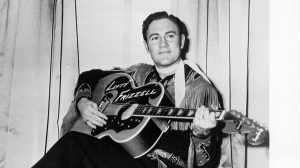
Lefty Frizzell, who had a major hit with a song written by Marijohn Wilkin -
Guitarist Tommy Tomlinson, October 28, 1930 — April 8, 1982. (Photo via Discogs.com) -
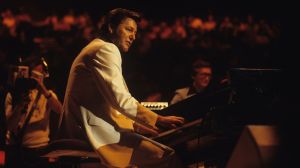
LONDON, UNITED KINGDOM – Pianist Floyd Cramer performs on stage at the Country Music Festival held at Wembley Arena, London in April 1979. (Photo by David Redfern/Redferns) -
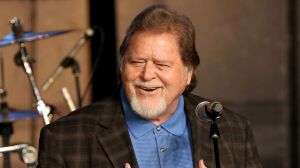
NASHVILLE, TENNESSEE – SEPTEMBER 25: Dallas Frazier performs at "Songs That Tell a Story," the final Marty Stuart Artist-in-Residence Show at Country Music Hall of Fame and Museum on September 25, 2019 in Nashville, Tennessee. (Photo by Terry Wyatt/Getty Images for Country Music Hall of Fame and Museum)