
The beauty of music is that its universal nature transcends language barriers, emotionally moving listeners regardless of whether they can understand the lyrics. (That’s also how we end up with songs that feel one way but are about something totally different.) Dusty Springfield had a similar experience while attending the Sanremo Music Festival in Italy in 1965.
Springfield was there to participate in a televised song contest, performing “Tu che ne sai?” (“What Do You Know About It?”) Although she was eliminated from the competition, she stuck around to watch the other performers at the event. While there, she heard Pino Donaggio’s “Io che non vivo (senza te)” or “I, Who Can’t Live (Without You)”. Springfield couldn’t understand the Italian lyrics, but she didn’t have to. The music, with all the passionate drama typical of Italian ballads of that time, was enough to sweep her off her feet.
Videos by American Songwriter
“I burst into tears when I heard that song,” Springfield later recalled, per Penny Valentine’s Dancing With Demons: The Authorized Biography of Dusty Springfield. The melody of this song would later be translated to her biggest career hit, “You Don’t Have To Say You Love Me”.
Dusty Springfield Called On Friends to Turn This Ballad Into a Hit
Upon returning to the U.K., Dusty Springfield set out to record her own version of “Io che non vivo (senza te)”. She wanted to create an English version that carried that same kind of bittersweet emotion, so she called upon her friend, Vicki Wickham.
Around that same time, Wickham went out to lunch with Yardbirds manager Simon Napier-Bell. “She told me that Dusty wanted a lyric for this song,” he recalled, per Jon Kutner and Spencer Leigh’s 1,000 U.K. Number One Hits.
“We went back to her flat and started working on it,” he continued. “We wanted to go to a trendy disco. So, we had about an hour to write it. We wrote the chorus. Then, we wrote the verse in a taxi to wherever we were going. It was the first pop lyric I’d written, although I’ve always been interested in poetry and good literature.”
The songwriting process for “You Don’t Have To Say You Love Me” might have felt effortless, but the recording process certainly didn’t. Springfield recorded over 45 vocal takes of the track in the spring of 1966, struggling to find the right sound for her voice. Eventually, studio engineer Peter Oliff suspended a microphone over a stairwell and had Springfield sing there to achieve the right echo.
The combined efforts of Springfield, the recording crew, and the songwriting duo paid off. “You Don’t Have To Say You Love Me” became Springfield’s most successful song in the U.S. and U.K., forever linking the English singer with the melancholy, heartfelt ballad.
Photo by David Farrell/Redferns
More Latest Music News & Stories
-
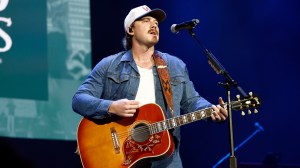
Photo by Jason Kempin/Getty Images for ABA -
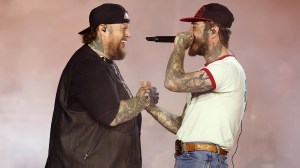
SALT LAKE CITY, UTAH – APRIL 29: Jelly Roll and Post Malone perform onstage during Post Malone Presents: The BIG ASS Stadium Tour Kick Off at Rice Eccles Stadium on April 29, 2025 in Salt Lake City, Utah. (Photo by Kevin Mazur/Getty Images for Live Nation) -
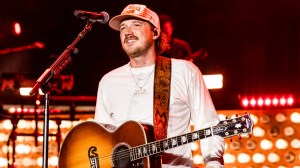
KNOXVILLE, TENNESSEE – SEPTEMBER 20: Morgan Wallen performs onstage for night one of his One Night At A Time tour at Neyland Stadium on September 20, 2024 in Knoxville, Tennessee. (Photo by John Shearer/Getty Images for Morgan Wallen's One Night At A Time 2024) -

Photo by Sacha Lecca/Rolling Stone via Getty Images -
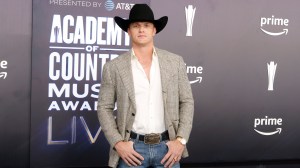
Photo by Taylor Hill/Getty Images -
Photo by Kevin Mazur/Getty Images LOVE ROCKS NYC/God's Love We Deliver -
INDIO, CALIFORNIA – OCTOBER 06: (EDITORIAL USE ONLY) (L-R) Axl Rose, Slash, and Duff McKagan of Guns N' Roses perform onstage during the Power Trip music festival at Empire Polo Club on October 06, 2023 in Indio, California. (Photo by Kevin Mazur/Getty Images for Power Trip) -
SANTA MONICA, CA – SEPTEMBER 27: Psychedelic folk singer Linda Perhacs performs live onstage at day 2 of the Way Over Yonder Festival at the Santa Monica Pier on September 27, 2014 in Santa Monica, California. (Photo by Scott Dudelson/Getty Images)