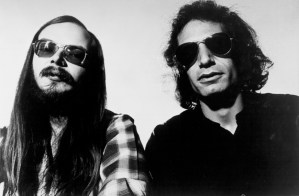
“Happy Birthday” is one of the most widespread songs of all time. Even those outside of the U.S. (Where the song was initially written) have translated this familiar tune into their languages, furthering its reach. For the most part, the tune hasn’t changed over the centuries. There is only one artist who has been able to create a new version of “Happy Birthday” that has stuck: Stevie Wonder.
Wonder’s rendition of “Happy Birthday” has been adopted by many celebrators as a jovial alternative to the original. Though many sing the chorus in Wonder’s version, not everyone knows the verses. This Wonder classic has a much deeper meaning that those who haven’t listened to the entire song may have missed. If you’ve ever sung Wonder’s remix, you’re participating in a history-making piece of art.
Videos by American Songwriter
The Meaning of Stevie Wonder’s “Happy Birthday”
Stevie Wonder’s “Happy Birthday” was released in 1980, three years before Martin Luther King Jr. Day was established nationally. In an effort to lobby for the holiday, Wonder released this track—an ode to the late activist and the way he shaped culture.
There ought to be a law against / Anyone who takes offense / At a day in your celebration ’cause we all know in our minds, Wonder sings in the opening verse of this song. Over a decade after the first murmurs of the holiday, Wonder decided to state his case the best way he knew how.
A Hidden, Activist Meaning
“As an artist, my purpose is to communicate the message that can better improve the lives of all of us,” Wonder once said. “I’d like to ask all of you just for one moment, if you will, to be silent and just to think and hear in your mind the voice of our Dr. Martin Luther King.”
Whether Wonder’s song was the final turning point or not, it is a part of the lengthy journey to establish MLK Day. He once spoke about the tenets of the day, putting any arguments against the holiday to bed.
“It would be a day for us to reflect upon our responsibilities as human beings,” Wonder added elsewhere, about MLK Day. “As recognizing all of those who have lived and died for the principles of peace and unity and equality for all people. We as people recognize him not based on his color or sex but basically because of what he did for moving minds to a greater and more senseful consciousness.”
Revisit Wonder’s “Happy Birthday” below.
(Photo by Fin Costello/Redferns)
More Behind The Song
-
Luther Vandross on stage at the 2002 American Music Awards at the Shrine Auditorium in Los Angeles January 8, 2002 (Photo by KMazur/WireImage) -
circa 1940: The Three Stooges turn plumbing equipment into musical instruments in a still from an unidentified film. L-R: Curly Howard (1903 – 1952), Moe Howard (1897 – 1975) and Larry Fine (1902 – 1975). (Photo by Hulton Archive/Getty Images) -
TODAY — Pictured: Keith Urban on Thursday, August 2, 2018 — (Photo by: Nathan Congleton/NBCU Photo Bank/NBCUniversal via Getty Images via Getty Images) -
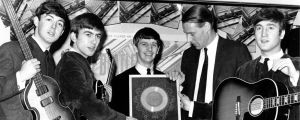
LONDON – 1964: Rock and roll band "The Beatles" poses for a portrait with their producer George Martin. (L-R) Paul McCartney, George Harrison, Ringo Starr, producer George Martin, John Lennon. (Photo by Michael Ochs Archives/Getty Images) -
Musician Dave Wakeling, founder of 'The English Beat' performs before thousands of rock fans at the US Festival, May 29,1983 in Devore, California. (Photo by Bob Riha, Jr./Getty Images) -
Miranda Lambert performs "Kerosene" at the Madison Square Garden in New York City, New York (Photo by Rick Diamond/WireImage) -
British singer Dusty Springfield (1939 – 1999) performing during a rehearsal for her TV show, 'It Must Be Dusty', at ATV Studios in Borehamwood, Hertfordshire, 1968. (Photo by Keystone/Hulton Archive/Getty Images)