On this day (October 29) in 1952, Hank Williams was on a long run at the top of multiple Billboard country charts with “Jambalaya (On the Bayou).” Cajun culture inspired the song from the ground up. Williams got the idea for the lyrics after overhearing a conversation about Cajun food. Then, he pulled the melody from the traditional song “Grand Texas.”
The blend of Cajun and country music in “Jambalaya (On the Bayou)” made it popular with fans of country and traditional Cajun music alike. Several musicians covered the song but used traditional instruments and translated the lyrics into Cajun French.
Videos by American Songwriter
Covers of the song weren’t limited to Cajun artists, though. The Carpenters, John Fogerty, the Nitty Gritty Dirt Band, and many more have recorded it. Brenda Lee performed it during her Ozark Jubilee debut and released it as her first single in 1956.
Hank Williams Scores a Crossover Hit During a Dark Time
Hank Williams was dominating the country chart in late 1952. He hadn’t released a song that missed the top 10 since 1949. At the same time, his concerts were drawing large crowds. However, things were not going well for him behind the scenes. He was in constant pain, which led him to abuse alcohol and painkillers. As a result, he was usually visibly intoxicated when he took the stage. Eventually, he began missing concerts. More specifically, he missed multiple scheduled Grand Ole Opry appearances, which caused Jim Denny to fire him from the show that August.
In the early 1950s, Billboard ran three country singles charts, which tracked songs’ jukebox spins, retail sales, and airplay. Williams topped all three with “Jambalaya (On the Bayou).”
It reached the top of the airplay chart for the first time on September 6. Then, on October 4, it topped the best-sellers chart. Finally, a week later, it reached No. 1 on the jukebox tally. It was at No. 1 for 14 non-consecutive weeks. The single also reached No. 2 on the pop chart, giving Williams his biggest crossover hit.
Featured Image by Michael Ochs Archives/Getty Images
-
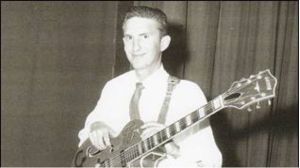
Guitarist Tommy Tomlinson, October 28, 1930 — April 8, 1982. (Photo via Discogs.com) -
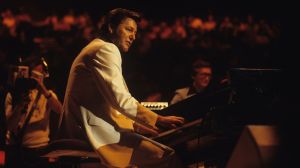
LONDON, UNITED KINGDOM – Pianist Floyd Cramer performs on stage at the Country Music Festival held at Wembley Arena, London in April 1979. (Photo by David Redfern/Redferns) -
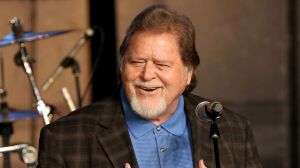
NASHVILLE, TENNESSEE – SEPTEMBER 25: Dallas Frazier performs at "Songs That Tell a Story," the final Marty Stuart Artist-in-Residence Show at Country Music Hall of Fame and Museum on September 25, 2019 in Nashville, Tennessee. (Photo by Terry Wyatt/Getty Images for Country Music Hall of Fame and Museum) -
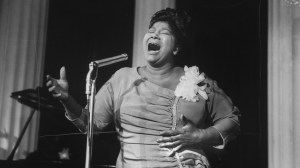
Singer Mahalia Jackson singing at reception in hotel. (Photo by Don Cravens/Getty Images)