Your cart is currently empty!



On This Day in 2005, We Said Goodbye to the Bassist Whose Lightning Speed Graced Works by Conway Twitty, Hank Williams, and More
When Hank Williams penned his posthumous masterpiece “Your Cheatin’ Heart”, he told a friend, “It’s the best heart song I ever wrote.” Sadly, Williams wouldn’t live to see himself proven right, as he tragically passed from heart failure in January 1953—nearly four months after he recorded the song during his final session on Sept. 23, 1952, at Nashville’s Castle Studio. That session produced three No. 1 hits, and Floyd “Lightnin’ Chance—who died on this day (April 11) in 2005—played stand-up bass on all of them.
Videos by American Songwriter
Remembering Floyd “Lightnin’” Chance
Seventeen years after his retirement in 1988, Floyd “Lightnin’” Chance died at age 79 in Nashville after suffering from cancer and Alzheimer’s disease. He left behind a rich legacy in country and pop music, which included Williams’ No. 1 singles “Kaw-Liga” and “Take These Chains From My Heart”.
His session work also included the Everly Brothers’ “Bye Bye Love”, Conway Twitty’s “It’s Only Make Believe”, Johnny Tillotson’s “Poetry in Motion”, and “Hello Walls” by Faron Young.
Born Dec. 21, 1925, in Como, Mississippi, Chance’s prowess on the high school football field earned him the nickname “Lightnin’.” That speed translated to music as well, as he played guitar, clarinet, saxophone and tuba during his school years.
During World War II, Chance received further advanced training from the U.S. Naval Conservatory, where he played with the Fourth Fleet Band during his service. Following his discharge from the Navy, he moved to Memphis, spending four years playing in Smilin’ Eddie Hill’s Band and performing on local radio stations.
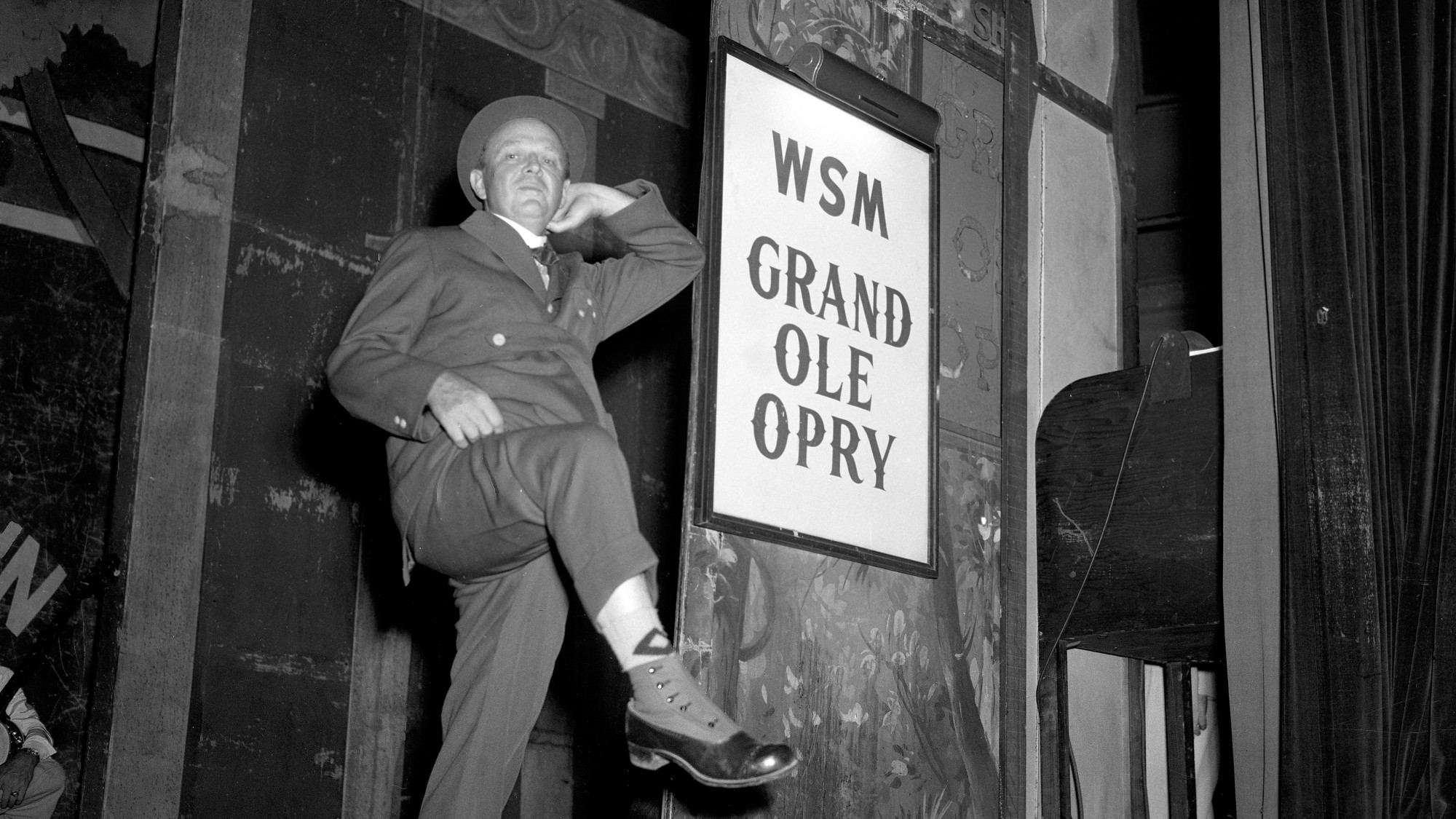
A frequent performer at the Grand Ole Opry during the 1950s and ’60s, Floyd Chance played with nearly every major Nashville star, including Marty Robbins, Patsy Cline, Sonny James, and Willie Nelson. Additionally, he adapted the Nashville Numbering System, a vocal chart for studio instrumentalists who could not read music were able to follow. It was originally developed in the mid-’50s by the the Jordanaires, a popular Nashville vocal group at the time.
He also recorded a comedy album called Don’t That Blow Your Hat in the Creek.
Featured image by Bob Grannis/Getty Images




Leave a Reply
Only members can comment. Become a member. Already a member? Log in.