Imagine that you’re a struggling artist several years into your music career, and things are so dire that you’re thinking of chucking it all and going to work with your father.
Now imagine it’s two years later, and your album, despite utter lack of confidence from your record company, spins off a couple of hit singles and sells about 200 times its original estimates.
Videos by American Songwriter
That’s essentially the trajectory that was followed by Careless, the 1976 debut album by Stephen Bishop. Not only did it introduce a singular singing-songwriting talent to the world, but it helped establish what turned out to be Bishop’s career full of surprising twists and turns, a career that, by the way, hasn’t quite run its course just yet.
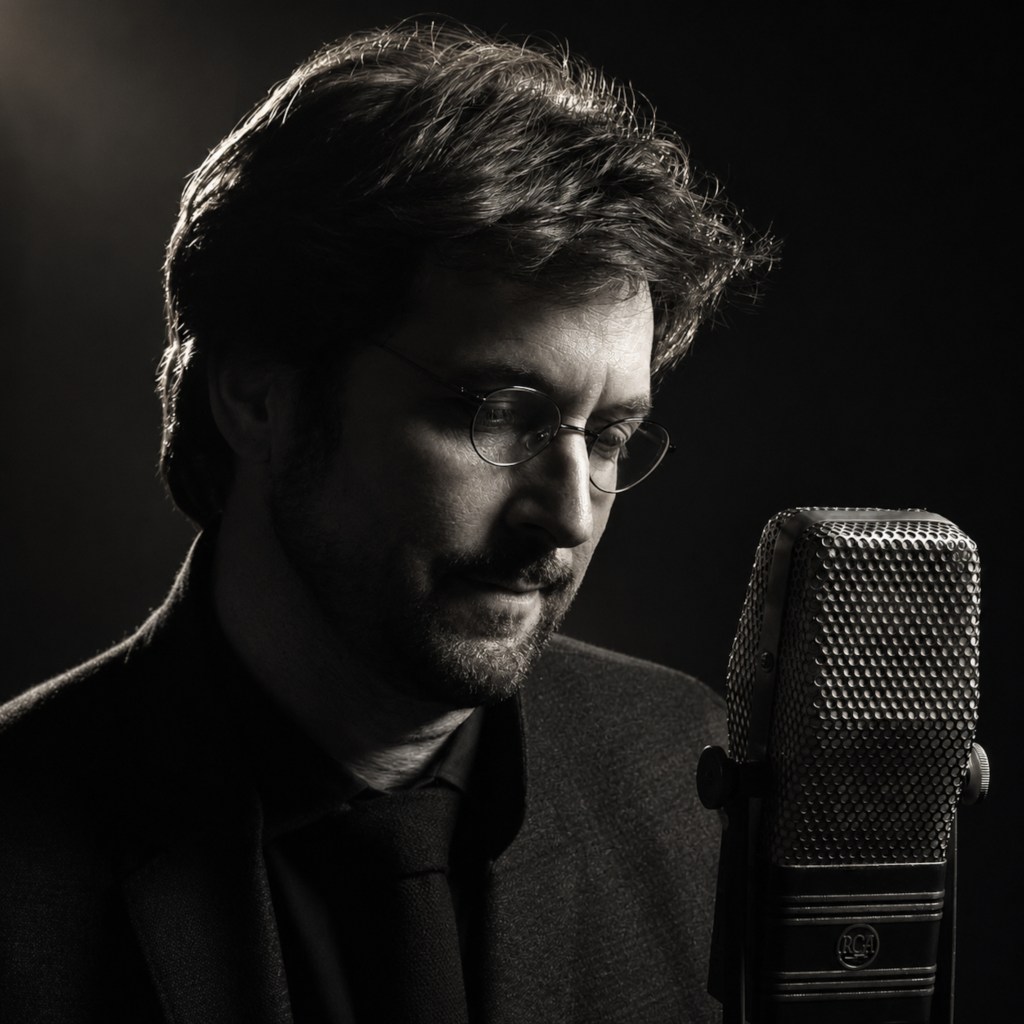
Now, Careless is coming back in a big way. In honor of its 50th anniversary, a vinyl reissue is giving the album the grand treatment it deserves. Among the many features: a fully remastered album featuring two outstanding cuts that were left off the initial release, liner notes, photos from the sessions, working drafts of the songs, a limited-edition splatter vinyl pressing, and a colorized version of the original black-and-white cover.
Just don’t try to get the guy behind it all to gush too much. Stephen Bishop is far too humble for that. About as close as he came to chest-thumping during a lengthy interview with American Songwriter was to say this: “It’s amazing. I’m happy that people appreciate it so much and that it meant so much to so many people. It’s a wonderful thing.”
The Careless reissue obviously offers listeners a chance to revisit a cycle of songs that are insightful, surprising, humorous, and strikingly vulnerable and honest. But by diving deep into the record’s creation, you’ll marvel at the many talented, famous people who came together to help Bishop realize his vision. And you’ll start to realize that something about the guy’s personality drew those luminaries to him even when he was a virtual nobody, luminaries who remained exceedingly loyal to him for the five decades since.
Not Quite Ready for the Insurance Game
When your dad reaches out and worries about your career path, it’s hard to ignore. This was especially true in the case of Stephen Bishop, who, by 1974, had spent about five years trying to break big, but to little avail.
“He sent me a telegram saying, ‘It’s time to come back to San Diego and work for me in insurance,’” Bishop recalls. “And I was close to going. I was really getting down there. I didn’t have much money. I’d already had unemployment insurance, and that had run out. I was really getting nervous.”
But as happens time and again in the Bishop story, the personal relationships that he cultivated helped put the spotlight on his talent. For example, how did Bishop, then an unknown, end up writing two songs on Art Garfunkel’s Breakaway album in 1975, an LP that also featured songs by established legends like Paul Simon, Hal David, and Stevie Wonder?
“That was a huge break,” Bishop acknowledges. “It was through my good friend, Leah Kunkel, who wound up giving a cassette of mine to her husband, Russ Kunkel, who was doing a session with Art. Then I got a call. And I wound up going in to meet Art and laying down a whole bunch of songs with (producer) Richard Perry on tape. He wound up picking two of my songs for the album.” Garfunkel loved the songs so much that he basically ejected two songs from the LP that he’d previously chosen to make room for Bishop’s contributions.
The solid was quickly repaid. “Art Garfunkel did me a big favor because he got me an advance from Columbia Records, who put out Breakaway,” Bishop says. “He got me a $3,000 advance. And that kept me alive for a while.”
The exposure from Breakaway soon helped Bishop secure his own deal, and he began recording his debut record at Shangri-La Studios in early 1976. His producer, at least at the start, was Roy Halee, famous for his work on Simon & Garfunkel’s legendary ‘60s albums. But it wasn’t long before a snafu materialized.
“He wanted to use Larry Knechtel, who was incredible and a great keyboard player,” Bishop says. “But I had my friend, John Jarvis. I was really loyal to him, and I wanted to use him on the album. And Halee said, ‘If you want to do that, you’re going to have to use another producer.’ That really scared me.
“I said, ‘I should call my manager.’ And he said, ‘Call your manager, and I’ll call my lawyer.’ It had taken like six years for me to get a record deal, and now I thought that this was going to be the end,” he adds. “I was really scared. But he wound up getting me a great producer, Henry Lewy, who worked with Joni Mitchell. So it worked out all right.” (Jarvis has played with Bishop for all the years since that moment, just another example of how his professional relationships tend to be long-running.)
Making Careless
With Lewy came the best of the best session players, which helps explain why Careless still sounds so sharp today. To add to the goodness, several guest stars showed up for support. Garfunkel, unsurprisingly, arrived to sing backing vocals.
But who would have guessed Chaka Khan helping out with vocals on several songs, even essentially duetting with Bishop on “Little Italy?” Khan was dating a friend of Bishop’s at the time she contributed.
Meanwhile, Eric Clapton showed up at the studio one day with Pattie Boyd on one arm and his guitar in the other. Clapton had been told by Bishop’s manager that Stephen was “a funny guy.” Clapton must have agreed, because he played on two tracks on Careless, including lead single “Save It For A Rainy Day.” The two men have collaborated many times since and remain close friends.
Happy accidents and unexpected moments enlivened the album. On the title track, Bishop decided to provide a faux-brass interlude by mimicking a trombone with his voice. “I used to do that back then,” Bishop chuckles. “I was in the middle of recording it when Quincy Jones came in from the studio next door and said, ‘Who’s playing that great trombone?’ And I said, ‘That’s me.’ And he just laughed and said, ‘Oh, man.’”
Bishop also thought that the somewhat exotic instrument known as the Electric Stick might be perfect for “Little Italy.” But when the instrumentalist played the part, it sounded terrible. He pivoted and nabbed ace session guitarist Larry Carlton to play the lick that ignited the song.
Even with the cachet that Bishop had gained in writing for Garfunkel and the parade of big names who played on the record, expectations were low for Careless. “The record company only put out 3,000 albums because they didn’t think it would sell,” Bishop says. “But college radio got onto it and really helped it along.”
Another thing that helped it along was a surprise hit single. Bishop and the record company earmarked “Save It For A Rainy Day” for the first song released to radio, and it didn’t disappoint, making it to No. 22 in 1977. And even though he liked the song, Bishop didn’t think much of the chances of the second single, “On And On” at radio.
Instead, the loping island grooves and the series of romantic misadventures that comprise the song hit a nerve. “On And On” rose to No. 11, helping boost Careless onto the Top 40 of the album charts in America. Quite the result for a guy who’d been thinking of calling it quits just a few years earlier.
One More Act for Bish
When American Songwriter last spoke to Bishop, it was to detail his 2025 album Thimk, which was billed as a farewell for the artist. Featuring collaborations with several of the famous folks already mentioned in this article plus a few more beyond that, it gave him a chance at a proper professional goodbye.
But as we found out when talking to him about this reissue, Bishop isn’t quite done. He’s planning on a tour that will take him around the U.S. and Europe, possibly even Japan and Australia. Ever the crowd-pleaser, he wanted this final go-round to make it up to folks who missed him when the pandemic shuttered his shows a few years back.
[RELATED: Stephen Bishop Releases One Final Album to Punctuate a Fantastic Career]
In the meantime, he’s grateful that a new audience is finding his music, especially those yacht rock fans who have embraced the Careless hits. And he’s fine with that association, by the way. “I’m all for yacht rock,” he says. “I hated being branded as soft rock, I never really was that. I don’t know how people got that idea.” Since he owns his own publishing, having the work rediscovered is a financial boon.
Look for those live shows to be announced later this year. In the meantime, Bishop is happy spending time with his wife, Liz—who helped immensely with the Carelessreissue—his young son, and several pets named after some of his famous friends. (The latest addition to the menagerie: Art Catfunkel.)
Just don’t expect him to brag too much about the little album that could, the one that jump-started a career that has included writing a No. 1 hit (“Separate Lives” for Phil Collins & Marilyn Martin), performing at the Oscars, and even getting his guitar smashed on screen by John Belushi in Animal House.
“It was at a time when I was ready to make a good album, I guess,” he shrugs with typical humility. A good album, that, at age 50, is still rolling, to borrow Bish’s own famous words, on and on.
More Features
-
Photo by Larry Hulst/Michael Ochs Archives/Getty Images -
DENMARK – MARCH 02: Photo of LED ZEPPELIN; Robert Plant – Led Zeppelin, March 2, 1973 in Copenhagen, Denmark (Photo by Jorgen Angel/Redferns) -
IRVINE, CA – AUGUST 14: Tom Petty and The Heartbreakers in concert at Irvine Meadows Amphitheater on August 14, 1989 in Irvine, California. (Photo by Jeffrey Mayer/WireImage) -
UNITED STATES – JULY 24: Photo of Johnny CASH; Johnny Cash performing on stage, (Photo by Gai Terrell/Redferns) -

NASHVILLE, TN – OCTOBER 29: Eagles, Timothy B. Schmit, Vince Gill, Don Henley, Decon Frey and Joe Walsh perform during the Eagles in Concert at The Grand Ole Opry on October 29, 2017 in Nashville, Tennessee. (Photo by Rick Diamond/Getty Images) -
NASHVILLE, TENNESSEE – SEPTEMBER 12: Honoree Vince Gill attends CMT Giants: Vince Gill at The Fisher Center for the Performing Arts on September 12, 2022 in Nashville, Tennessee. (Photo by Jason Davis/Getty Images for CMT)