It is the rare band that manages to enjoy a long, successful career without any lineup turnover. In many cases, the departure of a key member can ruin the momentum and prevent them from reaching their former heights.
Styx suffered a big hit when one of their key artistic contributors left the band in 1983. Yet their first record without him found the band right back in the Top 5 of the singles charts.
Videos by American Songwriter
Shaw’s Impact
Styx received a huge boost when Tommy Shaw joined the group in late 1975. They’d just enjoyed their first chart success when the ballad “Lady” became a belated hit. Shaw came aboard with excellent chops on guitar, a powerful voice to join the high harmonies the group favored, and songwriting skills to boot.
Over the next several years, Styx rose to the absolute heights of the rock world. With three unique songwriting points of view in Dennis DeYoung, James “JY” Young, and Shaw, Styx’s albums were rich and varied. They consistently crossed over to the singles charts as well.
The 1983 album Kilroy Was Here caused a rift in the band, however. Although it sold well and spun out a pair of Top 10 hits, Shaw didn’t like the direction of the album. After a tour that included theatrical elements further frustrated him, he left the band at the end of 1983.
Living on the ‘Edge’
Styx then sat out the rest of the 80s. Both DeYoung and Shaw started their solo careers in earnest. Shaw later joined Damn Yankees, a supergroup that scratched his itch for a harder-rocking approach (even though their biggest hit, “High Enough”, was a ballad).
Styx finally regrouped minus Shaw to release the album Edge Of The Century in 1990. Glen Burtnik replaced Shaw, filling in as singer, songwriter, and guitarist. In fact, Burtnik even received pride of place when “Love Is The Ritual”, which he co-wrote and sang, was chosen for the album’s first single.
Unfortunately, “Love Is The Ritual” didn’t do anything on the pop charts. Based on that result, many might have guessed that Styx’s days of big hits were behind them. But then they turned to something that had worked often for them before. They relied on a sweeping Dennis DeYoung ballad.
DeYoung’s Magic Touch
DeYoung wrote “Show Me The Way” in response to some problems that his son was having at school. The song settles into a gospel vibe, as the narrator struggles to find his faith when confronted with all of life’s ills. Meanwhile, DeYoung hits the upper regions of his register as he belts out the refrain.
“Show Me The Way” was already working its way up the charts when it received an unexpected boost. An industrious DJ pasted news clips pertaining to the Gulf War in the middle of the song. That version helped connect the ballad to the events of the day for listeners.
In the end, “Show Me The Way” peaked at No. 3 on the pop charts. It proved that the band was still commercially viable at a time when many of their late 70s, early 80s contemporaries were struggling. And it also demonstrated their resilience in managing to soar without a key component of their previous success.
(Photo by Paul Natkin/Getty Images)
More Features
-
LOS ANGELES – APRIL 20: Pop singer Michael Jackson of the R&B quintet "Jackson 5" poses for a photo shoot at his Hollywood Hills home on April 20, 1972 in Los Angeles California. (Photo by Michael Ochs Archives/Getty Images) -
NASHVILLE – 1965: Country singer Dolly Parton poses for a portrait in 1965 in Nashville, Tennessee. (Photo by Michael Ochs Archives/Getty Images) -
Photos by Brad Elterman/FilmMagic -
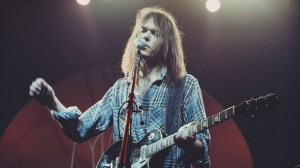
Canadian singer-songwriter and musician Neil Young performs on stage with Crazy Horse at Hammersmith Odeon, London, 28th March 1976. (Photo by Michael Putland/Getty Images) -
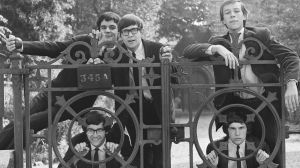
Group portrait of The Zombies in West London, 1965. L-R (back) Colin Blunstone, Paul Atkinson, Hugh Grundy (front) Chris White, Rod Argent. (Photo by Stanley Bielecki/ASP/Getty Images) -

CHANHASSEN, MINNESOTA – JUNE 10: (L-R) Charles F. Spicer Jr., L. Londell McMillan, and Latoya Gaines speak onstage at the Prince Paisley Park Celebration 2023 at Paisley Park on June 10, 2023 in Chanhassen, Minnesota. (Photo by Kevin Mazur/Getty Images for Paisley Park)