If you are a devout Beatles fan, then you know the history behind their iconic No. 1 hit song, “Come Together”. If you don’t, then long story short is that Chuck Berry’s song “You Can’t Catch Me” heavily influenced John Lennon during the writing process. As a matter of fact, the opening lines in both songs are nearly identical. Consequently, after the song’s release, Berry’s publishing company, Big Seven Music, accused Lennon of plagiarism.
Instead of settling the case in court, Lennon agreed to record three songs for Big Seven Music. Though it seems this concern was a concern from the start, as Paul McCartney voiced his perspective on the matter when John Lennon first showed him the song back in the late 1960s.
Videos by American Songwriter
Paul McCartney Loved the Song, but He Knew John Lennon Needed To Change It Up
In an interview with Dana Carvey and David Spade on Fly On The Wall, Paul McCartney recalled the moment John Lennon showed him “Come Together”. Paul McCartney seemingly dug the song, but he knew that if they didn’t alter some things, Berry’s parties would meet the band with legal action.
“We’re in Abbey Road Studio number two, and John comes in, and he goes, ‘Listen to this one I got… Here come old flat top,’ and I go, ‘John, stop, that’s ‘You Can’t Catch Me’ by Chuck Berry,’” McCartney said. “And he goes, ‘Yeah, I know. But it’s good though, isn’t it?’ I said, ‘No, you gotta do something with it.’”
McCartney continued, “So, that was a case where we had to get it out of that Chuck Berry tempo. You couldn’t change that opening line. It’s just such a good opening line, and John had to pay Chuck Berry for using that later.”
Despite changing the tempo of the song, it seems that it still wasn’t enough to avoid a legal dispute. Nevertheless, this was seemingly no sweat off John Lennon and The Beatles’ backs, as the song was an enormous success.
Following its release, “Come Together” peaked at No. 1 on the Billboard Hot 100. As of 2025, The Beatles’ iconic single has over 885 million streams on Spotify. Furthermore, it has reportedly sold an estimated 15.33 million in single sales worldwide. Needless to say, it seems this act of plagiarism was well worth it in the long run for The Beatles and John Lennon. As three songs for a lasting legacy of nearly 60 years seems like quite the trade-off. Well, if you ask us at least.
Photo by CBS Photo Archive/Getty Images
More Features
-
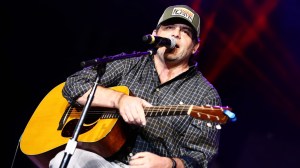
LAS VEGAS, NEVADA – APRIL 05: Rhett Akins performs onstage at ACM: Stories, Songs & Stars: A Songwriter's Event Benefiting ACM Lifting Lives on April 05, 2019 in Las Vegas, Nevada. (Photo by Rich Fury/Getty Images for ACM) -
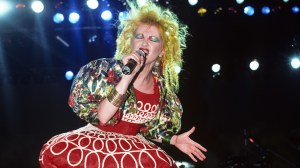
Cyndi Lauper performing at a WNEW Christmas Concert at Madison Square Garden in New York City on December 19, 1986. -
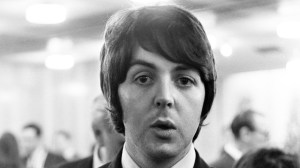
Paul McCartney of The Beatles, at press conference to announce Leicester University's art festival, held at the Royal Garden Hotel, London, 5th February 1968. (Photo by Blandford/Mirrorpix/Getty Images) -
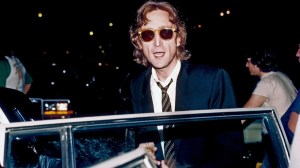
NEW YORK – AUGUST 1980: Former Beatle John Lennon arrives at the Times Square recording studio 'The Hit Factory' before a recording session of his final album 'Double Fanasy' in August 1980 in New York City, New York. (Photo by Vinnie Zuffante/Getty Images) -
CHICAGO, ILLINOIS – American musician Lacy J. Dalton (born Jill Lynne Byrem) performs on stage at the Park West Theater, Chicago, Illinois, April 4, 1981. (Photo by Paul Natkin/Getty Images) -
Waylon Jennings, who had a major hit with a Ray Pennington song -
NEW YORK, NY – DECEMBER 03: Cyndi Lauper performs onstage during the 6th Annual Home For The Holidays Concert at Beacon Theatre on December 3, 2016 in New York City. (Photo by Santiago Felipe/Getty Images)