We often associate Bob Dylan the most strongly with the transition from acoustic to electric in the 1960s, but that was a road nearly every popular musician and band had to face if they wanted to remain relevant in the following decade, and that was certainly true of The Beach Boys. Unlike Dylan, who started to pick up steam the further along into his discography he went, the West Coast pop band had been struggling for years to recreate the sunny success of their early hits like “Surfin’ U.S.A.” and “California Girls”.
Part of that challenge came from The Beach Boys’ transition from a vocal group with backing musicians to a full-fledged band, leaving them to find their own acoustic-electric transition.
Videos by American Songwriter
From the Beach Boys to a Bona Fide Band in a Decade
The Beach Boys scored their first chart-topping hits in the early 1960s, back when Robert Zimmerman was still laying the groundwork for the musician that would come to be known as Bob Dylan (and years further still from his electric transition at the Newport Folk Festival). By 1965, Dylan transitioned from his folk-hero persona to a new, edgier, rock-driven style. The Beach Boys were holding on to their genre of West Coast romanticism, but even they could tell the date was coming to a close.
Dylan’s transition to electric was one of many driving forces shifting the public’s preference toward rock-oriented music. Bands were becoming more popular than singular performers. (The Beatles played a large role in that trend, too.) The Beach Boys were buoying themselves with the airtight instrumental arrangements of the Wrecking Crew, the iconic group of L.A. studio musicians who played on The Beach Boys’ records. But the “Good Vibrations” band was missing, well…the band part. As the group’s popularity continued to wane from the late 1960s to the early 70s, The Beach Boys started prioritizing playing their own instruments.
That left the guitar playing responsibilities to Carl Wilson and Al Jardine, the latter of whom took on his duties lightheartedly. “I look at myself as a songwriter, producer, and arranger,” Jardine told Guitar World in 2025. “I’m really a crappy guitar player.”
Jardine’s musical abilities speak for themselves. But his hesitation is also a testament to the hurdle that so many musicians who began cutting their teeth in the early 1960s had to overcome in the latter half of the decade. If you wanted to stay visible in the age of amplified rock ‘n’ roll, then you had to be prepared to get loud.
The West Coast Band Had Their Own Bob Dylan Moment
Al Jardine didn’t significantly contribute to the instrumental aspect of The Beach Boys’ records until the 1970s with albums like Surf’s Up and Holland. Still, his love of vocal-heavy, melodic music never waned. “Acoustic over electric is really more my style.” The Beach Boys’ transition to electric wasn’t a matter of preference. It was a matter of necessity—just like Bob Dylan, Jardine argued. Speaking to Guitar World, Jardine said, “I had to learn to play electric guitar when I formed The Beach Boys.”
“It was like Bob Dylan. He had a choice, and he decided he was going to join the electric group,” Jardine continued. “Even though people weren’t happy about it. I think he and I made the right choice.”
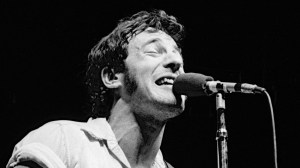
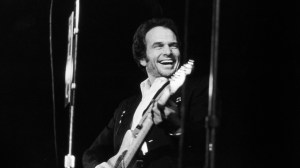
Photo by Michael Ochs Archives/Getty Images
More Features
-
Photo by Luciano Viti/Getty Images -
ANN ARBOR, MI – NOVEMBER 22: American singer, songwriter, and guitarist Boz Scaggs performs on November 22, 1980, at the Hill Auditorium in Ann Arbor, Michigan. (Photo by Ross Marino/Getty Images) -
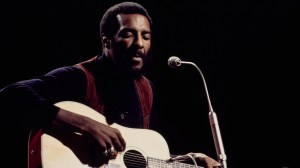
American singer-songwriter and guitarist Richie Havens, wearing a tan-coloured suede waistcoat over a black turtleneck sweater, plays a Guild D-40 acoustic guitar during a television appearance in London, England, circa 1970. (Photo by Tony Russell/Redferns/Getty Images) -
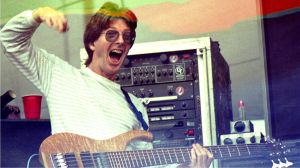
EUGENE, OR – (EDITORS NOTE: Multiple exposure made in camera) Phil Lesh of the Grateful Dead performs at Autzen Stadium on June 23, 1990 in Eugene, Oregon. (Photo by Tim Mosenfelder/Getty Images) -
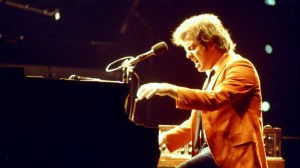
UNITED STATES – JANUARY 01: Billy Joel performs live on stage during his 1980 US tour (Photo by Richard E. Aaron/Redferns) -
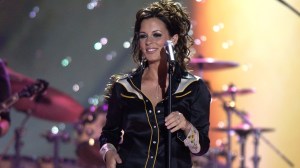
ara Evans performs "Suds In The Bucket" during 39th Annual Academy of Country Music Awards – Show at Mandalay Bay Resort and Casino in Las Vegas, Nevada, United States. (Photo by M. Caulfield/WireImage for Bragman Nyman Cafarelli)