
These 1960s folk songwriters could pack an entire story into a single verse. It’s mind-boggling how proficient these writers were at storytelling. Revisit some of their biggest songs from this era to be reminded of their singular songwriting ability.
Bob Dylan
We’re starting with an obvious choice: Bob Dylan. This 1960s folk songwriter has long exhibited an unmatched ability to tell a succinct story. Even in his less narrative tracks, Dylan has no trouble delivering lyrics that send the listeners on a mind trip. Deeply visual, relatable, and profound, Dylan’s 1960s songs were top-tier songwriting.
Videos by American Songwriter
Take one of his biggest 1960s offerings, for example, “Like A Rolling Stone”. “You’ve gone to the finest schools, alright Miss Lonely / But you know you only used to get juiced in it / Nobody’s ever taught you how to live out on the street / And now you’re gonna have to get used to it / You say you never compromise / With the mystery tramp, but now you realize / He’s not selling any alibis,” the lyrics read. Though this isn’t a typical storytelling song, it conveys a robust, rich narrative about a woman’s fall from grace.
Phil Ochs
Phil Ochs was less a songwriter and more an anthropologist. He captured the human experience better than most in his era, delivering songs that could double as pages in history books. “Show me a prison, show me a jail / Show me a prison man whose face is growing pale / And I’ll show you a young man with many reasons why / And there but for fortune may go you or I,” the lyrics to one of his biggest 1960s offerings, “There But For Fortune”, read. In this song, Ochs flexed his ability to boil heady ideas down into digestible morsels.
This song explains the nature of luck through several characters and their misfortunes. “Show me the country where the bombs had to fall / Show me the ruins of the buildings once so tall / And I’ll show you a young land with so many reasons why / And there but for fortune may go you or I,” the lyrics continue. It’s a masterclass in painting the human experience.
Leonard Cohen
Leonard Cohen had no desire to become a songwriter, but in the end the power of his poetry won out. When we listen to his 1960s songs, we can’t imagine him following any other path. His storytelling was unmatched in this era, proving he had no choice but to grace us all with his talent.
“Suzanne takes you down to her place, near the river / You can hear the boats go by, you can spend the night beside her / And you know that she’s half-crazy, but that’s why you wanna be there / And she feeds you tea and oranges that come all the way from China / And just when you mean to tell her that you have no love to give her,” he sings in this track, creating a stunning character piece.
Photo by Hulton-Deutsch Collection/CORBIS/Corbis via Getty Images
More The List
-

Bryan Adams, kanadischer Rocksänger und Gitarrist bei einem Konzert in Dortmund, Deutschlland 1984. Canadian rock singer and guitarist Bryan Adams performing live at Dortmund, Germany 1984. (Photo by Fryderyk Gabowicz/picture alliance via Getty Images) -

Smashing Pumpkins at the World Music Theater in Tinley Park, Illinois, July 27, 1994. (Photo by Paul Natkin/Getty Images) -
Photo by CBS Photo Archive/Getty Images -
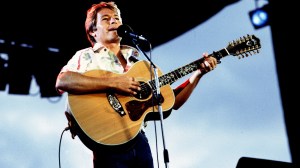
John Denver on 8/9/82 in Chicago,Il. (Photo by Paul Natkin/WireImage) -

UNSPECIFIED – JANUARY 01: Photo of Billy JOEL (Photo by Mike Prior/Redferns) -
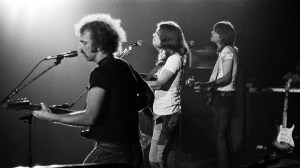
The Eagles perform on stage at the Concertgebouw, Amsterdam, Netherlands, 1972. L-R Bernie Leadon, Glenn Frey, Randy Meisner. (Photo by Gijsbert Hanekroot/Redferns) -

CHICAGO – CIRCA 1958: Rock and roll musician Chuck Berry poses for a portrait session in circa 1958 in Chicago, Illinois. (Photo by Michael Ochs Archives/Getty Images) -

Photo by Tim Hall/Redferns