
We could spend all day talking about the innovations that The Beatles brought to the world of pop music. Their ability to incorporate strings into their songs stands as one of their most underrated accomplishments.
After all, think of how many post-Beatles songs used strings to great effect. These four tracks from the Fab Four helped get the ball rolling.
Videos by American Songwriter
“Yesterday”
Tony Gilbert, Sidney Sax, Kenneth Essex, and Francisco Gabarro. You might not recognize those names. But you hear their work every time you listen to what’s perhaps The Beatles’ most famous song. Those four musicians formed the string quartet that accompanies Paul McCartney’s guitar and vocals on “Yesterday”. You have to wonder if they had any idea about the gravity of the session that they were attending. Once The Beatles realized that they couldn’t lend this song a traditional rock arrangement, they left it to producer George Martin to fill in the blanks. To his credit, Martin practiced incredible restraint, ensuring that the song’s melody was accentuated, not overwhelmed, by the strings.
“Eleanor Rigby”
Once “Yesterday” knocked down the door, The Beatles realized that strings could work on some of their more nuanced songwriting efforts. It’s also likely that they started to write certain songs with the idea of strings dancing in the backs of their minds. Although there’s some dispute about the provenance of “Eleanor Rigby”, it seems most likely that Paul McCartney handled the music while John Lennon likely helped out on some of the lyrics. Regardless, the song that emerged from that process called for a string arrangement a bit more aggressive than what was offered on “Yesterday”. In this case, it was an octet handling the duties, providing all the dramatic embellishment to the sorrowful tale.
“She’s Leaving You”
John Lennon and Paul McCartney created “She’s Leaving Home” based on an actual story that they read in the newspaper about a teenage runaway. McCartney immediately knew he wanted an orchestral score for the song. But he impatiently insisted on getting it done on a day when George Martin already had a previous commitment. Unwilling to wait, McCartney called on Mike Leander to provide the score for the song. To Leander’s credit, he rose to the occasion. In addition to the violins, violas, and cellos, he brilliantly incorporated the harp of Sheila Bromberg as well. Martin was none too pleased with being denied involvement. But it’s impossible to argue with the end result.
“Golden Slumbers”
When The Beatles decided to make Abbey Road, they had to convince George Martin to return to the fold. Martin’s frustration with how he’d been sidelined during the making of Let It Be made him hesitant. Paul McCartney’s beseeching phone call eventually convinced him. But Martin also relished the opportunity to bring sweeping symphonic elements to the group’s sound. You can hear some of this approach peppered throughout Abbey Road, albeit most clearly in the closing medley. In the middle portions of “Golden Slumbers”, the strings swirl about as if being blown around by the winds of change. Considering the timing of Abbey Road, that was certainly an apropos effect, because change was certainly coming.
(Photo by: Universal Archive/Universal Images Group via Getty Images)
More The List
-

Photo by Tony Russell/Redferns -
(Photo by Richard E. Aaron/Redferns) -
Photo by Ed Perlstein/Redferns/Getty Images -
Credit: Ross Marino/Icon and Image/Rock Negatives -
Photo By Larry Busacca/Getty Images -
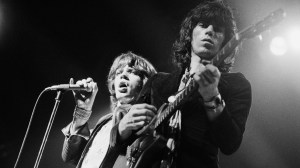
Singer Mick Jagger and guitarist Keith Richards performing with the Rolling Stones at the Empire Pool, Wembley, London, 9th September 1973. (Photo by Michael Putland/Getty Images) -
Photo by David Hume Kennerly/Getty Images -
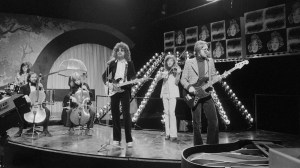
English pop group Electric Light Orchestra (ELO) rehearsing for their appearance on the BBC TV music show 'Top Of The Pops', London, 11th October 1973. The band are miming to their single 'Showdown'. Left to right: Bev Bevan (drums), Mike Edwards (1948 – 2010), Rick Pannell, Jeff Lynne, Mik Kaminski and Mike de Albuquerque. Pannell is the band's sound engineer and is standing in (miming only) as second cellist after the departure of Colin Walker from the group. (Photo by Michael Putland/Getty Images)