
Originally part of the new wave of British heavy metal in 1980, Def Leppard emerged as a hard rock force to be reckoned with. Even when they performed ballads they put power behind then. By their third album Pyromania—which went multi-Platinum, turned them into rock stars, and more firmly established their creative relationship with producer Mutt Lange—the group found commercial crossover success that would lead to a shift into more pop-flavored territory.
While they have certainly maintained a legion of loyal fans over the years, there are some who mostly love the first three albums—On Through the Night, High ‘n’ Dry, and Pyromania—because they represent the quintet’s purer hard rock electricity. Def Lep’s original group—vocalist Joe Elliott, guitarists Pete Willis and the late Steve Clark, bassist Rick Savage, and drummer Rick Allen—would transform into their classic lineup with the departure of Willis and arrival of Phil Collen on their third album. It marked an aesthetic shift as well, but not immediately.
Videos by American Songwriter
Here are six deep cuts from the British band’s earlier days that highlights their harder style.
“Satellite” from On Through the Night (1980)
This track opens up as a brawny rock anthem and gives us rowdy choruses full of tumbling riffs. Then it unexpectedly dials things back for a low-key bridge before some furious soloing. “Satellite” qualifies as much as a rock-along as sing-along track that puts a lot of changes into its four-and-a-half minute running time.
“Overture” from On Through the Night (1980)
Here’s a unique, multifaceted composition in the Def Lep universe, a throwback to the prog days of the previous decade with fantasy-flavored lyrics about rebuilding a ravaged land. It opens and closes with pastoral folk sections, while the main song bursts into something akin to Rush with an Iron Maiden gallop. There is a plethora of guitar solos and dulcet vocal harmonies that almost don’t sound like Elliott, and that’s meant in a positive way.
“Lady Strange” from High ‘n’ Dry (1981)
While its intro hints at becoming an electric power ballad, “Lady Strange” turns into an animated declaration of devotion to a woman who beguiles and confuses the protagonist. It’s chock full of high-octane riffs and solos along with Elliott’s soaring vocals. This is the type of energized and heavy song that helped define the group’s early days.
“Mirror Mirror (Look into My Eyes)” from High ‘n’ Dry (1981)
“Mirror Mirror” is a fan-favorite deep cut with a slightly darker vibe than a lot of Def Lep’s other tunes. The insistent stomp of the music matches the insecurity and brooding self-reflection within the lyrics. Sometimes one looks into the mirror and questions whether what they’re seeing is their true self or the image they desire.
“Stagefright” from Pyromania (1983)
True to its name, “Stagefright” has a nervous yet powerful energy to it, with hard-driving verses brushing up against melodic choruses. But it’s not literally about the titular subject; instead, it’s about a titillating night with a groupie in the making. It’s alpha-male energy translated into song, but one can get past the dated debauchery and just enjoy the wall of sound.
“Comin’ Under Fire” from Pyromania (1983)
The theme of desire continues from “Stagefright” into this more agitated rocker, but here the guy has no control of the situation. He’s beguiled and befuddled and doesn’t want to plead with the woman he craves, but he may have to. Striking guitar harmonies punctuate the drama at the end. This is one of three tracks from Pyromania co-written by the band’s former guitarist Pete Willis; he also co-wrote “Too Late for Love” and the mega-hit “Photograph.” “Comin’ Under Fire” is a deep cut that made the band’s setlist this year.
When you purchase through links on our site, we may earn an affiliate commission.
Photo by Andre Csillag/Shutterstock
More The List
-
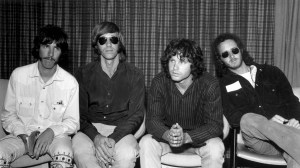
3rd September 1968: American psychedelic rock band, The Doors during a press conference at Heathrow Airport, London (left to right); drummer John Densmore, keyboard player Ray Mansarek, vocalist Jim Morrison (1943 – 1971) and guitarist Robby Krieger. (Photo by Central Press/Getty Images) -
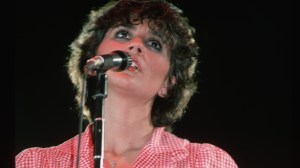
Original Caption) : 1980-Pop singer Linda Ronstadt is shown singing on stage, holding the microphone stand. She wears a gingham shirt with a tie front and askirt with flowers on it in this waist-up portrait. (Photo by Lynn Goldsmith/Corbis/VCG via Getty Images) -
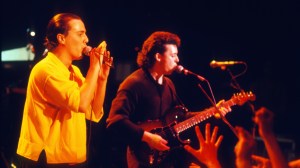
Tears for Fears – Koninklijk Circus – Brussel – Belgium – 21/04/1985 Roland Orzabal, Curt Smith Photo gie Knaeps -
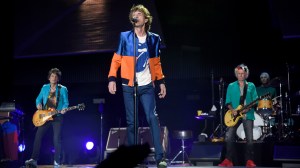
The Rolling Stones at Desert Trip -
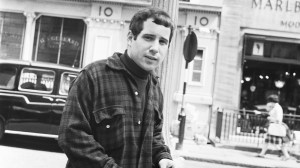
Pauk Simon 1965.© Chris Walter. -
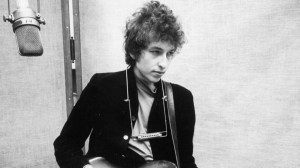
NEW YORK – JANUARY 13-15: Bob Dylan plays a Fender Jazz bass with the harmonica around his neck while recording his album 'Bringing It All Back Home' on January 13-15, 1965 in Columbia's Studio A in New York City, New York. (Photo by Michael Ochs Archives/Getty Images) -
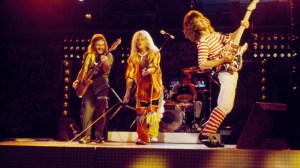
Photo by Luciano Viti/Getty Images -
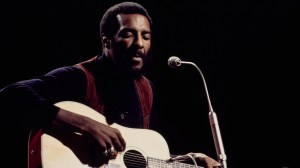
American singer-songwriter and guitarist Richie Havens, wearing a tan-coloured suede waistcoat over a black turtleneck sweater, plays a Guild D-40 acoustic guitar during a television appearance in London, England, circa 1970. (Photo by Tony Russell/Redferns/Getty Images)