Discussions about early rock ‘n’ roll and blues music often center around the likes of Chuck Berry and Ray Charles, respectively, despite B.B. King being an integral player in either genre. This exclusion is a natural consequence of King’s inability to break into the mainstream as a crossover artist, and although it confused him at first, he later accepted his musical trajectory.
After all, once he landed on this hilarious two-word description of his music, his lack of commercial success made sense to the Delta blues icon.
Videos by American Songwriter
B.B. King Had a Unique Description of His Influential Blues Style
From ZZ Top to Jimmy Page to Susan Tedeschi, B.B. King has been a significant influence on rock and blues artists who came after him. Yet, when we think of the most ubiquitous musicians of either genre, he’s often bringing up the rear of the top ten, rather than perched at the No. 1 spot. While he had no small shortage of accolades throughout his decades-long career, he was never quite as mainstream as contemporaries like Chuck Berry or Ray Charles. That took some time to get used to, according to King.
In a 1996 interview with Fresh Air, King said, “In the beginning, I was really confused about the way the politics ran in music. I always thought if you made a good record, it was a good record. Not Black, not white, not red or yellow. But people would like it. Some people would like it. But I learned quickly after I got into the music business that there are so many categories, and you can get lost. You’re a little fish in a big pond.”
As any artist would, King started examining the differences between his music and the music of his more mainstream counterparts. “People like Ray Charles, people like Chuck Berry, all these guys to me were very talented. All of them were very energetic when it comes to playing music. They didn’t play the slow, droopy-drawers music like I did. So, I found that maybe that was my reason. That they had things I didn’t have.”
To classify King’s highly influential playing style as “droopy-drawers music” seems laughably short-changed, but the guitarist said he found peace with it.
He Was Never Going To Be Another Chuck Berry, and That Was Okay
Comparison is one of the greatest pitfalls an artist can face in their career. Pitting oneself against other musicians is a surefire way to sow seeds of self-doubt, anxiety, and jealousy in even the most talented players. For B.B. King, he was going to have to let go of the idea that he should be a mainstream artist just because Ray Charles was. King was never going to be duck-walking Chuck Berry, and that was going to have to be okay.
During his Fresh Air interview, King said he stopped short of growing envious of his contemporaries. “I’m the country boy that left the country, but they never got the country out of me. So, I didn’t have that stage presence that they have.” Part of what helped King accept his unique playing style was the advice of his manager, who once told him, “Do not go to New York trying to be Nat Cole or anybody else that’s trying to be slick because there are people that are sweeping the floors that are much better than you’ll ever be.”
“The best thing for you to do is go there and be B.B. King,” the guitarist continued. “Sing “3 O’Clock Blues.” Sing the songs that you sing the way you sing them. All these other people can do all of those other things. But they can’t be you as you can be you.”
Apt advice any musician can use, whether they’re perfecting their “droopy-drawers music,” duck-walking across the stage, or otherwise.
Photo by David Redfern/Redferns
More Features
-
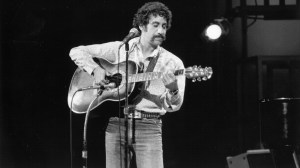
UNSPECIFIED – CIRCA 1970: Photo of Jim Croce Photo by Michael Ochs Archives/Getty Images -

Singer-songwriter John Prine performs at Symphony Hall on April 26, 1974 in Atlanta, Georgia. (Photo by Tom Hill/Getty Images) -

American singer-songwriter Billy Joel, performing in New York City, 7th December 1977. (Photo by Michael Putland/Getty Images) -
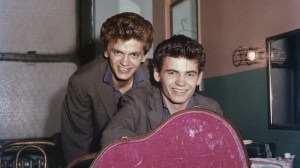
American rock and roll singers the Everly Brothers, Phil and Don Everly, circa 1958. (Photo by Archive Photos/Getty Images) -

Photo by Michael Ochs Archives/Getty Images -
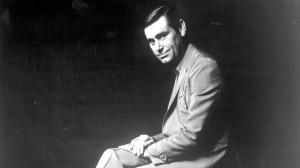
UNSPECIFIED – CIRCA 1970: Photo of George Jones Photo by Michael Ochs Archives/Getty Images -
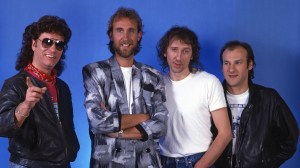
1986: British pop rock group Mike and the Mechanics (Paul Carrack, Adrian Lee, Mike Rutherford, Peter van Hooke, Paul Young) (Photo by BSR Agency/Gentle Look via Getty Images)