Nowadays, it’s rare to find a top-selling artist who doesn’t hit the road and can sustain a career in the studio alone. It’s not unheard of, and the precedent is certainly there. The Beatles helped to make a case for this kind of artistry and the studio magic it can produce.
It’s well known that The Beatles didn’t thrive as a live band. Though they were more than capable of playing alongside any of their peers, audience screams made it impossible to hear their talent. Moreover, the grueling route they had to take to reach their uncountable number of fans was exhausting and ultimately not worth the energy. John Lennon was one member who needed some convincing to get back on the stage. He found that through a side project that reawakened his love of playing live.
Videos by American Songwriter
The One Live Show That Made John Lennon Want To Get Back Out on Stage
Toward the latter years of their tenure, The Beatles decided to permanently park the tour bus and become a studio-only band. That decision proved fruitful as it allowed them to innovate and go beyond what anyone thought was possible from a studio standpoint.
It wasn’t until he got onstage with the Plastic Ono Band, after years away from the road, that he found his spark again. At a 1969 show, Lennon played with the Plastic Ono Band, including Eric Clapton, remembering what he loved about live music in the first place.
“The buzz was incredible,” Lennon once said. “I never felt so good in my life. Everybody was with us and leaping up and down doing the peace sign, because they knew most of the numbers anyway. When we did ‘Money’ and ‘Dizzy’ I just made up the words as I went along. The band was bashing it out like hell behind me.”
When we think of a rockstar, we rarely think of them in the studio. We imagine them on stage, wowing a crowd with an unparalleled energy. So the fact that The Beatles decided to quit that part of the rockstar lifestyle has always felt like a missed opportunity, even though their reasons were understandable.
Luckily, we have performances like this one from Lennon, or the many Paul McCartney and Ringo Starr have put on in recent years, that give us a glimpse of what it could’ve been like to have the Fab Four out on the road for their entire run.
Photo by New York Times Co./Larry C. Morris/Getty Images
More Features
-
(Photo by SGranitz/WireImage) -
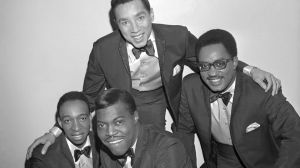
(L-R) Ronnie White (1938 – 1995), Pete Moore (1938 – 2017), Smokey Robinson and Bobby Rogers (1940 – 2013), of the American vocal group Smokey Robinson & The Miracles, pose for a portrait backstage prior to their appearance on the Ed Sullivan Show at the Ed Sullivan Theater in New York City, New York, March 31, 1968. (Photo by Jeff Hochberg/Getty Images) -
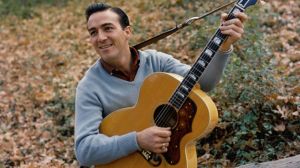
UNSPECIFIED – JANUARY 01: Photo of Faron Young (Photo by Michael Ochs Archives/Getty Images) -

CHICAGO – CIRCA 1958: Rock and roll musician Chuck Berry poses for a portrait session in circa 1958 in Chicago, Illinois. (Photo by Michael Ochs Archives/Getty Images) -
Photo by Tim Hall/Redferns -
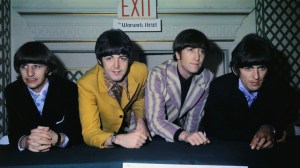
(Original Caption) The Beatles are shown at a press conference at the Warwick Hotel. Standing left to right are: Ringo Starr, (wearing polka dot shirt), Paul McCartney, John Lennon, and George Harrison. -
Phil Vassar (Photo by Jason Squires/WireImage)