While few would classify Heart as a hair metal band, they were certainly adjacent to the movement with their sky-high ‘dos and reverb-laden power ballads. At the very least, the 1980s saw the band transition from the more straightforward rock of the previous decade to the glamorous, theatrical subgenre bolstered by bands like Poison and Guns ‘N’ Roses.
But just like their teased-to-the-heavens hair, what comes up must eventually come down, and that downward spiral directly coincided with the rise of grunge in the late 1980s and early 1990s. Indeed, grunge was a death knell for most hair metal bands…except, surprisingly, Heart.
Videos by American Songwriter
How Heart Escaped The Backlash To Hair Metal
Heart rose to fame in the 1970s with tracks like “Barracuda” and “Magic Man,” which eventually gave way to soaring power ballads and hook-filled pop rock like “Alone,” “These Dreams,” and “All I Want to Do Is Make Love to You.” However, not even the relative success of their 1980s hits was enough to save them from the impending tidal wave of grunge music. The metaphorical needle was moving toward a grittier and less polished sound, ushered in by bands like Nirvana and Pearl Jam. For most hair metal bands, it was a cultural shift from which they were never able to fully bounce back. But Heart was different.
Their roots in Seattle, Washington, certainly helped. In a 2010 interview with Classic Rock, guitarist Nancy Wilson recalled, “We came back [to Seattle] out of the ‘80s with our tails between our legs. We were one of those hair bands that were so uncool overnight. I can’t tell you how relieved we were to find that out after the ‘80s, and we came back to Seattle, because guys like [Alice in Chains guitarist] Jerry Cantrell were there going, ‘Oh my god, you’re such an influence.’ I still well up when I remember him asking me how the beginning of “Mistral Wind” went. We were playing guitars at Ann [Wilson, singer]’s house and just trying to find our community again in Seattle, and there it was, larger than we ever expected it to be.”
Ann and Nancy Wilson both feared that their commercial success in the early to mid-1980s would have turned their hometown community off to the musicians, but the opposite was true. Not only did Seattle welcome them back with open arms. It also gave the sisters some pointers for navigating this new musical world.
How Ann and Nancy Wilson Reinvented Themselves Post-Hair Rock
In the age of grunge, authenticity was king. Independent was infinitely better than commercial. To be mainstream was, as Heart vocalist Ann Wilson put it to Classic Rock in 2010, “the kiss of death.” Despite their foray in the Billboard Hot 100, Seattle musicians welcomed the Wilson sisters back into the fold as if they had never left. “Within a year,” Ann said, “we had The Lovermongers going. We’d taken off the corsets and the fingernails and the extensions, and we were walking around in our own shoes again. It was amazing. A wonderful musical healing.”
The Lovemongers, an acoustic group comprised of the Wilson sisters, Sue Ennis, and Frank Cox, and Heart released various albums, compilations, and other singles in the latter half of the 1990s. Eventually, the nostalgia for Heart’s ‘70s and ‘80s music returned, spurring tours with Journey, a Kennedy Center Honors performance for Led Zeppelin, and an induction into the Rock and Roll Hall of Fame.
For as fickle and fleeting as the music industry can be, Ann and Nancy Wilson of Heart have managed to survive even the most professionally catastrophic of cultural shifts, from ‘70s rock to ‘80s hair metal to ‘90s acoustic and beyond.
Photo by Mediapunch/Shutterstock
More Features
-
UNITED KINGDOM – JANUARY 01: WEMBLEY ARENA Photo of Johnny DUNCAN and Janie FRICKE, w/Johnny Duncan (Photo by David Redfern/Redferns) -
LONDON, UNITED KINGDOM – JANUARY 11: Debbie Harry of Blondie performs on stage at Hammersmith Odeon on January 11th, 1980 in London United Kingdom. (Photo by Pete Still/Redferns) -
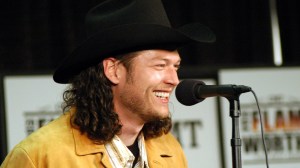
lake Shelton, presenter Video Director of the Year (Photo by Frank Mullen/WireImage) -
Photo by Robert Kern/Getty Images -

NEW YORK – SEPTEMBER 1958: Pianist Bob Gaudio, drummer Tom Austin, tenor sax Larry Qualiano, singer Dianne Costello and guitarist Billy Dalton of the rock and roll band "The Royal Teens" pose for a portrait in September or October of 1958 at the Brooklyn Paramount in New York, New York. (Photo by PoPsie Randolph/Michael Ochs Archives/Getty Images) -
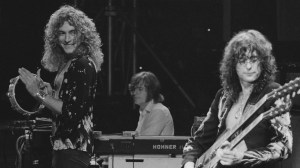
Left to right: Robert Plant, John Paul Jones and Jimmy Page, of British heavy rock group Led Zeppelin, performing at Earl's Court, London, May 1975. The band were initially booked to play three nights at the venue, from 23rd to 25th May, but due to public demand, two more concerts were later added, for 17th and 18th May. Total ticket sales were 85,000. (Photo by Michael Putland/Getty Images)