In hindsight, it would be easy to assume that Tom Petty burst onto a scene hungry for riff-centric, Rolling Stones-y rock ‘n’ roll. However, according to Petty, when he was fresh off the release of his 1976 eponymous debut as Tommy Petty And The Heartbreakers, this couldn’t have been further from the truth. Rock ‘n’ roll was the cadaver everyone else was ready to kick to the curb, while Petty and his bandmates were the ones trying to convince everyone it was still alive.
Gainesville, Florida, in the mid-1970s wasn’t so sure. Speaking to Stephen K. Peeples for Rock Around The World in 1977, Petty said, “People in Gainesville were telling me I lived in a dream world, thinking that rock ‘n’ roll would come back. They didn’t think it was hip unless it was bluegrass or very college-oriented stuff. I dig all that stuff. But by denying rock ‘n’ roll to everyone—the club owners denied it, the press denied it, and the people denied it—they f**ked the situation up every way they could, discouraging creativity on every front.”
Videos by American Songwriter
Petty continued, “People lost their gigs in clubs because they played originals, and one by one, everyone who could play anything started leaving.” Petty might’ve followed suit, had he not been so stubbornly set on achieving success in sunny Los Angeles.
By the Next Decade, Tom Petty Helped Revive Rock ‘n’ Roll
In the years leading up to The Heartbreakers’ debut album, Tom Petty was playing in a band called Mudcrutch. The group got a few bites from record labels in Los Angeles, but when Petty made the big move from Florida to California, the potential record deals fell apart. The Heartbreakers were Petty’s pivot, which was clearly the right career move. Although their first album release was met with crickets, they grabbed the attention of rock ‘n’ roller Nils Lofgren, who invited the group to open for him on a United Kingdom tour.
Unsurprisingly, the American rockers who had built their sound on the backs of British rockers like The Beatles, The Hollies, The Stones, and The Kinks did well in front of those bands’ original audiences. The U.K. tour was so successful, in fact, that when the band returned stateside, they found themselves in a whole new echelon of fame. Suddenly, the band wasn’t scraping by and begging their record label for attention. They were quickly ascending the ranks of rock ‘n’ roll royalty, each new level serving as an “I told you so” moment to everyone in Gainesville who doubted that rock would rise again.
Petty spent the rest of his decades-long career catering to lovers of good, old-fashioned rock ‘n’ roll. The riffs aren’t lightning-fast or particularly ornate, but they’re memorable, effective, and exciting, which is all a rock riff ought to be. Petty’s penchant for melodies and crafting songs that were both poignant and simple made him a universally beloved rock icon. Emphasis on rock, the genre that wasn’t dead after all—it just needed the right player to help revive it.
Photo by Aaron Rapoport/Corbis/Getty Images
More Features
-
(Photo by Rob Verhorst/Redferns) -
Photo by Richard Corkery/NY Daily News via Getty Images -
Photo by Bettmann/Getty Images -
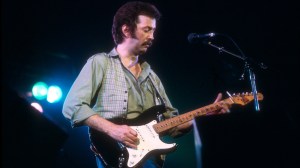
Photo by Christian Rose/Roger Viollet via Getty Images -

Singer Annabella Lwin of the band Bow Wow Wow backstage at The Channel 1982 in Boston, Massachusetts. (Photo by BC Kagan/Getty Images) -
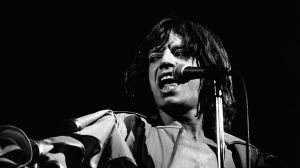
Mick Jagger performing at a Rolling Stones concert. Photo shows: Head and shoulder shot of Mick Jagger in performance. (Photo by © Hulton-Deutsch Collection/CORBIS/Corbis via Getty Images) -
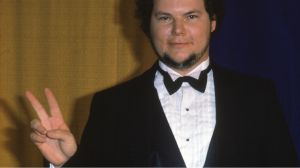
American pop singer and songwriter Christopher Cross flashes the victory sign at the 23rd Annual Grammy Awards, where he won the Grammies for Record of the Year (with producer Michael Omartian), Album of the Year (with producer Michael Omartian), Song of the Year, Best New Artist, and Best Arrangement Accompanying Vocalist(s) (with coarranger Michael Omartian), Radio City Music Hall, New York, New York, February 25, 1981. (Photo by Tom Gates/Getty Images)