War, human rights, police brutality; so many of the issues people protested decades ago are still relevant today, unfortunately. The more things change the more they stay the same, as they say. These five protest songs are as relevant today as they were when they were first written and released. Now bona fide anthems, their words still resonate.
1. “Give Peace a Chance” by John Lennon and Plastic Ono Band (1969)
Arguably the most enduring, universally known protest song, John Lennon’s “Give Peace a Chance” has been adopted by all ages and folks of all backgrounds all over the world. Its message is simple: All we are saying is give peace a chance. Lennon wrote the cry for world peace during the famous bed-in protest he conducted with wife Yoko Ono in Montreal, and recorded it right there in the hotel room. It was released as a single by their Plastic Ono Band collaboration. The song immediately became an anthem against the Vietnam War, and has been embraced in protesting subsequent wars, including the Russo-Ukraine War.
Videos by American Songwriter
2. “War” by Edwin Starr (1970)
Here’s another lyric that states the obvious: War! What is it good for? Absolutely nothing, say it again. “War” has been covered by various artists, from Bruce Springsteen to Frankie Goes to Hollywood to Canadian punk legends D.O.A. The song also protests the Vietnam War, and was co-written by Norman Whitfield and Barrett Strong. It was originally recorded by the Temptations, but it was the harder-hitting version by Edwin Star that lit a true fire under the words. Springsteen later reinvigorated the song in the mid-’80s with his even more fiery rendition.
3. “What’s Going On” by Marvin Gaye (1971)
After the Four Tops’ Renaldo “Obie” Benson witnessed a peaceful protest turn into a violent attack by police at People’s Park in Berkeley, California, he talked to Motown songwriter Al Cleveland about it, who turned the experience into the lyric. But Benson’s fellow Four Tops didn’t want to cut it, so Marvin Gaye took it and made it his own. The song is credited to all three, Gaye, Benson, and Cleveland.
Brother, brother, brother
There’s far too many of you dying
You know we’ve got to find a way
To bring some lovin’ here today, yeah
[RELATED: The Enduring Meaning Behind Marvin Gaye’s Signature Hit “What’s Going On?”]
4. “Get Up Stand Up” by Bob Marley and the Wailers (1973)
This reggae song written by Bob Marley and Peter Tosh was apparently inspired by the extreme poverty Marley witnessed while touring Haiti. The lyric can be applied to so many situations: Get up, stand up. Stand up for your right. Get up, stand up. Don’t give up the fight. On a macro scale, it’s about fighting against oppression; but on a micro, more personal scale, it tells you to stand up for what you believe in and not back down, regardless the scenario.
5. “Fight the Power” by Public Enemy (1989)
Director Spike Lee asked rap group Public Enemy to write a song about racial tension for his 1989 film Do the Right Thing. Then they cut a different version for their ground-breaking album, Fear of a Black Planet. The song’s repetitive chorus of “Fight the power” is a rallying anthem for youth, with “rhymes designed to fill your mind.” Frontman Chuck D was inspired by The Isley Brothers’ 1975 track of the same name, interpolating the line “You gotta fight the powers that be.”
Photo by David Redfern/Redferns
More Features
-
Photo by David Hume Kennerly/Getty Images -
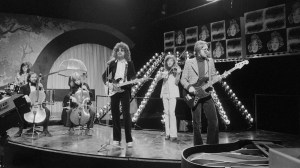
English pop group Electric Light Orchestra (ELO) rehearsing for their appearance on the BBC TV music show 'Top Of The Pops', London, 11th October 1973. The band are miming to their single 'Showdown'. Left to right: Bev Bevan (drums), Mike Edwards (1948 – 2010), Rick Pannell, Jeff Lynne, Mik Kaminski and Mike de Albuquerque. Pannell is the band's sound engineer and is standing in (miming only) as second cellist after the departure of Colin Walker from the group. (Photo by Michael Putland/Getty Images) -
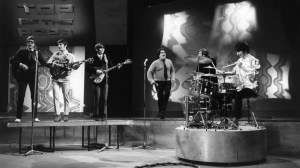
American rock and pop group The Turtles perform the song 'She'd Rather Be With Me' on the set of the BBC Television pop music television show Top Of The Pops at Lime Grove Studios in London on 8th June 1967. Members of the band are, from left, Jim Pons, Jim Tucker, Al Nichol, Mark Volman, Howard Kaylan and John Barbata. (Photo by Ivan Keeman/Redferns) -
(Photo by Murray/Mirrorpix via Getty Images) -
Photo by Michael Ochs Archives/Getty Images -
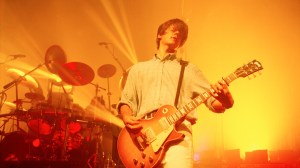
Guitarist John Squire performs live on stage with rock group The Stone Roses at Cambridge Corn Exchange in Cambridge, England on 1st December 1995. (Photo by Brian Rasic/Getty Images) -
Photo by Matthew Peyton/Getty Images